



Public Health Wales launches a Well-being Economics and Value (WEAVE) team

Case study
Wales, United Kingdom
Part of a public (national health service) body funded by Welsh Government
Wales is taking a forward-looking approach to public health by embedding prevention and long-term wellbeing into economic decision-making. Through the Well-being of Future Generations Act and its commitment to building an economy of well-being, the country is shifting from reactive spending toward investing in the conditions that support health, equity, and sustainability. The WEAVE initiative by Public Health Wales strengthens the use of economic and social value evidence to guide policy and investment, and helps decision-makers prioritise actions that deliver broader and more equitable benefits for current and future generations.
Context and problems addressed
Wales faces escalating challenges that affect population health and wellbeing, such as demographic and climate change, growing inequalities and poverty, limited job opportunities and increasing economic inactivity. These trends have highlighted the need to move beyond reactive healthcare toward a stronger focus on prevention and long-term population well-being, to give current and future generations a good quality of life.
At the same time, Wales has positioned itself internationally as a pioneer in developing an “Economy of Well-being,” an approach that places human and planetary well-being at the centre of economic policy. Wales's commitment to sustainable development and well-being economy was formalised through the Well-being of Future Generations (Wales) Act 2015. This landmark legislation requires public bodies to take a long-term and preventive approach to decision-making, to work collaboratively across sectors, and to integrate social, economic, environmental, and cultural objectives. The Act and following legislation, strategies and policies, provide a strong legal and policy foundation for reframing public spending as an investment in future well-being rather than a short-term cost.
Within this context, Public Health Wales has been working in close collaboration with the World Health Organisation (WHO) Regional Office for Europe to strengthen the economic case for prevention, designating a WHO Collaborating Centre on Investment for Health and Well-Being (WHOCC) in 2018, successfully re-designated until 2030. It focuses on identifying innovative approaches, intervention and tools that generate multiple co-benefits across health, social, economic, and environmental domains to help build wellbeing economies in Wales and beyond.
Intervention and financing model
In early 2026, Public Health Wales formally launched the Well-being Economics and Value (WEAVE) team as part of the WHOCC. WEAVE gathers, generates, and shares evidence using health economics and social value approaches to support sustainable and equitable decision-making. The team produces policy briefs, conducts evaluations and economic modelling, and builds capacity through knowledge mobilisation and stakeholder engagement. Its work spans Wales and extends internationally through collaboration with the WHO, EuroHealthNet and other key global and European partners.
Rather than creating a separate funding mechanism, WEAVE strengthens analytical capacity within existing institutions. It supports decision-makers in applying economic and value evidence to prevention approaches, while also investing in long-term capacity-building across the system. The WEAVE team’s key areas of work are illustrated in the image below.
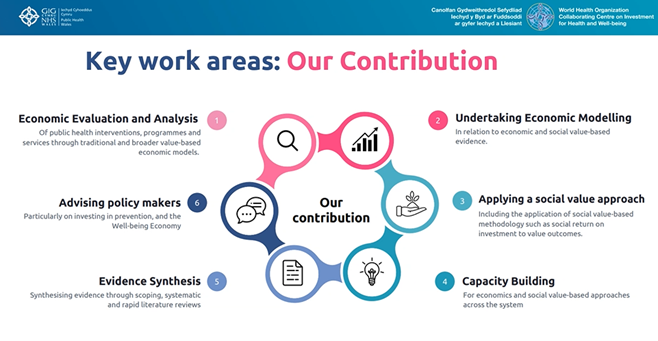
An important task of the team has been to estimate the economic cost of health inequalities in Wales and to assess the distributional cost-effectiveness of public health programmes. This means complementing traditional cost-effectiveness analysis with approaches that examine how costs and benefits are distributed across different population groups. In addition, the team is pioneering the application of Social Return on Investment (SROI) methodologies to capture the wider social, environmental, and economic outcomes and value generated by public health interventions.
WEAVE’s evolving work programme indicates four key areas of focus: health economics (e.g. costs of smoking, tuberculosis, and health inequalities), economic modelling (prevention spending and policy impacts), social value (e.g. immunisation and trauma-informed practice), and wellbeing and foundational economies (supporting the WHO European Well-being Economy initiative and its national implementation to strengthen the health sector as an economic driver and local 'anchor').
Rather than creating a separate funding mechanism, WEAVE strengthens analytical capacity within existing institutions.
Key outcomes and associated measurements
The establishment of the WEAVE team signals institutional commitment to prioritising prevention and reducing inequalities.
WEAVE’s aim is to use novel health economics and social value approaches to influence policy and investment decisions of Welsh Government, NHS Wales, and other organisations whose decisions impact population health and community well-being, as well as wider system sustainability and resilience.
Related case studies

Addressing maternal mortality and morbidity in California through public-private partnerships

Health insurance funds – Combined Lifestyle Interventions in the Netherlands

Workplace health promotion to facilitate physical activity among office workers in Sweden
About EuroHealthNet
Building a healthier future for all by addressing the determinants of health and reducing inequalities.
EuroHealthNet is the Partnership of public health agencies and organisations building a healthier future for all by addressing the determinants of health and reducing inequalities. Our focus is on preventing disease and promoting good health by looking within and beyond the health system.
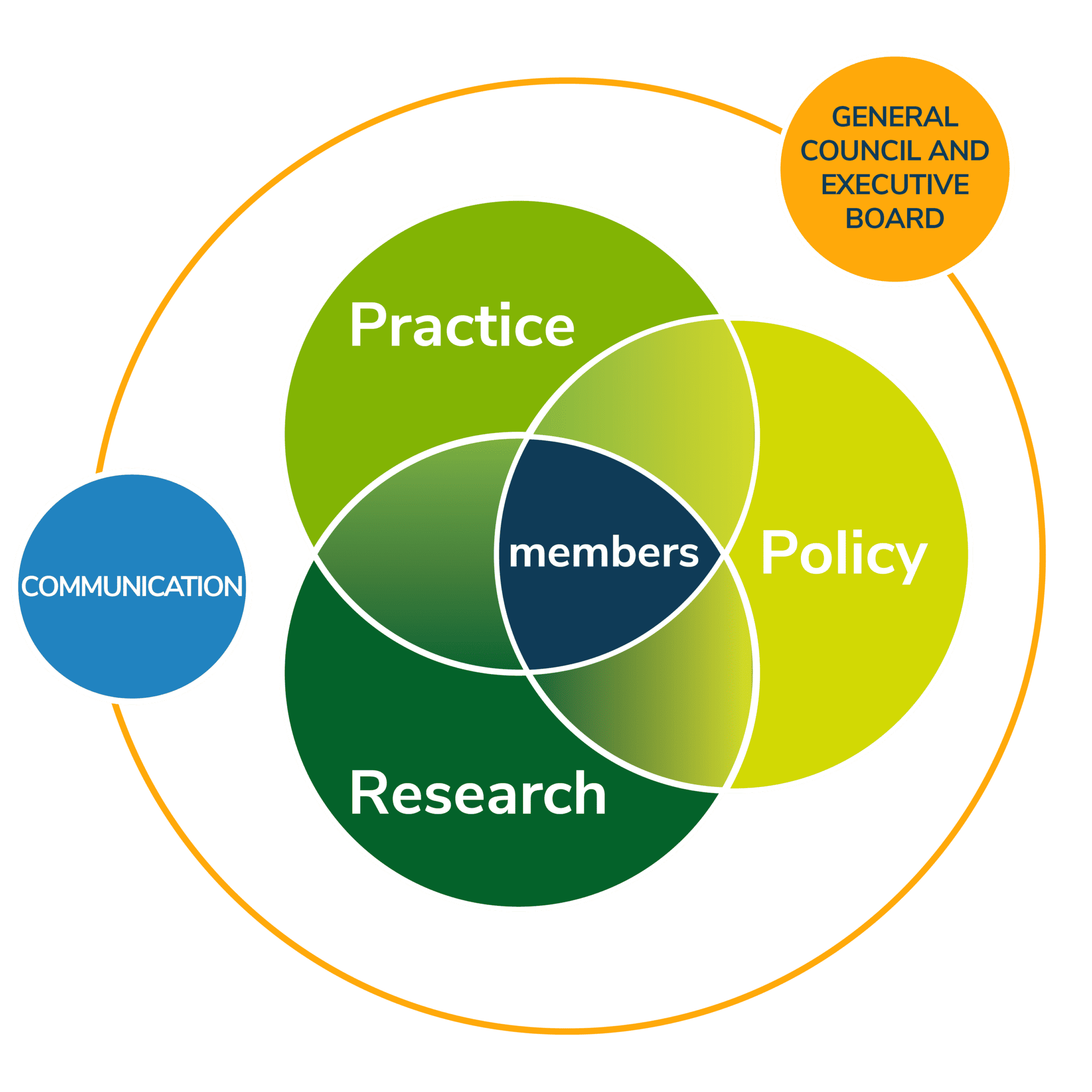
Structuring our work over a policy, a practice, and a research platform, we focus on exploring and strengthening the links between these areas.
Our approach focuses on integrated concepts to health, reducing health inequality gaps and gradients, working on determinants across the life course, whilst contributing to the sustainability and wellbeing of people and the planet.
EuroHealthNet is co-funded by the European Union. However, the information and views set out on this website are those of the author and do not necessarily reflect the official opinion of the European Commission. The Commission does not guarantee the accuracy of the data included on this website. Neither the Commission nor any person acting on the Commission's behalf may be held responsible for the use which may be made of the information contained therein.