



EuroHealthNet Guide for Financing Prevention and Health Promotion
How to get started
Stage 7: Scale and sustain intervention
This stage supports decision-makers and practitioners in taking the next step after designing and testing a Smart Capacitating Investment (SCI) initiative: moving toward sustained, system-level impact. It explores how SCI principles can be embedded in policy cycles, financing frameworks, and cross-sector governance at regional, national, and European levels so that health promotion and disease prevention become routine components of public planning rather than time-limited projects.
Drawing on the Invest4Health experience and the broader European policy landscape, this section identifies practical entry points, common barriers, and the governance and capacity conditions that make scaling possible. It does not offer a blueprint, but it does offer a set of approaches that can be adapted to different mandates and starting points.
What you will learn
- Consider Smart Capacitating Investment principles in policy and planning cycles.
- Start the transition from time-limited pilots towards sustained, system-level financing arrangements.
- Identify and consider pathways to overcome common institutional barriers to scale SCI, including legal, budgetary, and sectoral siloes.
Key concepts and rationale
The prevention investment gap and why it persists
Despite clear evidence of value — with prevention showing a median return of €14 for every €1 invested, only about 3% of health budgets in the EU are spent on prevention and public health, compared to over 65% for curative care.
This is not simply a funding problem. It reflects a deeper structural misalignment: prevention generates returns across sectors and over time, while health financing systems remain short-term, siloed, and oriented toward clinical events rather than long-term population health. Changing this requires more than large health budgets, it requires a fundamental reorientation of how prevention is understood, financed, and governed.
Only about 3% of health budgets in the EU are spent on prevention and public health, compared to over 65% for curative care.
A challenging and shifting policy landscape
Understanding why this gap persists requires an honest look at the current EU policy environment. While the EU has significantly expanded its public health-relevant activities since 2009, moving beyond a narrow market-based approach towards greater attention to health promotion, social determinants, and equity, its institutional architecture, designed primarily to promote economic integration and competitiveness, continues to limit its ability to deliver systematically on upstream prevention.
Some structural features of EU governance reflect this constraint. Health Ministers meet once a year at EU level, compared to roughly monthly for finance ministers — a difference that limits the regularity of political coordination on prevention investment. In June 2024, EU Health Ministers unanimously adopted conclusions calling for stronger EU policies on health promotion and disease prevention, and invited the European Commission to establish an EU Health Investment Hub. The EU ‘2024-29 Strategic Agenda’ published shortly afterwards, however, focused on security, competitiveness, and resilience, and did not include explicit references to health promotion or disease prevention.
The 2024–2029 Commission mandate reflects similar priorities — and while a healthy, productive population is ultimately central to European competitiveness, questions remain about the extent to which upstream public health and health equity will receive dedicated strategic attention. Looking ahead, the EU4Health programme, which represented a significant expansion of EU investment in public health following COVID-19, is likely not continue as a standalone instrument in the 2028–2034 Multiannual Financial Framework, with its resources to be integrated into a newly established European Competitiveness Fund.
Windows of opportunity within a constrained landscape
This is not to say that the policy environment offers no entry points. Several EU frameworks contain genuine opportunities for SCI — but they require active and deliberate work to activate.
The European Pillar of Social Rights, Cohesion Policy, and the European Social Fund Plus prioritise social inclusion, employment, housing, and education, all key determinants of health. The European Green Deal promotes walkable cities, clean air, and sustainable transport, investments that are, in practice, large-scale health promotion interventions, even if not recognised or evaluated as such. Europe's Beating Cancer Plan has elevated prevention to a cross-sectoral investment priority, and the new EU Safe Hearts Plan explicitly acknowledges that only around 3% of healthcare expenditure goes to prevention despite strong evidence for its efficiency. The proposed EU Anti-poverty Strategy and the European Affordable Housing Plan both address determinants that WHO Europe estimates account for a significant share of health inequalities.
The key challenge is that these connections to health promotion are implicit rather than explicit. Prevention objectives appear across these frameworks in references to wellbeing, resilience, and inclusion but they are rarely operationalised with clear governance, dedicated financing, or accountability mechanisms.
Health policy has a role to play too
Health systems will always need to finance care for people who are already sick, that is not in question. But the current balance is unsustainable. Health policy has been slow to recognise and resource the full spectrum of what keeps people healthy, and too often health strategies remain focused on clinical pathways and acute care, even as evidence points overwhelmingly to social, environmental, and economic determinants as the primary drivers of health outcomes. Shifting this balance requires health policy to acknowledge and address the full spectrum of factors affecting our health. In practice, this means:
- explicitly recognising non-clinical interventions such as community health approaches, social prescribing or improving health literacy as legitimate, fundable components of health systems;
- aligning with environmental sustainability goals by supporting active travel, and climate-resilient urban design as prevention investments; and
- creating financing frameworks with space for outcome-based and cross-sector models, moving away from activity-based payment systems that systematically undervalue prevention.
Across Member States, some progress is visible. Finland has embedded health promotion within social, education, and labour policies through Health in All Policies approach. The Netherlands has shifted health promotion and prevention responsibilities toward municipalities which are now required by law to develop local public health strategies every four years and deliver tailored prevention programmes through regional public health services. The United Kingdom has used social prescribing - linking patients to community-based, non-clinical support - and outcomes-based commissioning to mobilise community assets. These examples show system-level change is possible but also how much depends on deliberate institutional design and sustained political commitment that most European contexts have not yet achieved.
Potential approaches to scaling and sustaining SCI
The policy landscape described above contains real opportunities for SCI but structural constraints, shifting priorities, and fragmented governance mean that closing the prevention investment gap requires deliberate action at multiple levels simultaneously.
The approaches below draw on the collective learning from the Invest4Health project - across its testbeds, tools, and policy work - and are not a prescribed sequence, they are a set of mutually reinforcing levers that decision-makers and practitioners can draw on depending on their context, mandate, and entry point whether at European, national, regional, or organisational level. What matters is identifying where the greatest opportunity lies in your context, and building from there.
Key messages and next steps
Scaling and sustaining Smart Capacitating Investment is ultimately a governance and political challenge as much as a financing one. The following messages reflect what the Invest4Health experience and the broader European policy landscape suggest about what it takes to move prevention from the margins of public planning into its core.
- Prevention and health promotion are already present in many policy frameworks across education, employment, environment, and social cohesion. The opportunity is to make this implicit investment explicit, measurable, and accountable. SCI provides the logic to do so.
- Scaling SCI rarely requires building from scratch. The most effective entry points tend to be existing policy cycles, budget processes, and cross-sector mandates that can be reframed around long-term prevention investment.
- Governance and ownership must be built early. The conditions that allow an initiative to survive and grow (e.g., named ownership, shared governance, institutional memory) need to be in place long before the end of any piloting period to ensure effective translation into established policy and practice.
- Reallocation of existing resources is often the most realistic starting point. More complex financing models are worth pursuing, but they require institutional readiness, staff capacity, and time that must be honestly assessed.
- Embedding SCI as a way of governing, rather than a named tool or programme, is what makes change durable. When long-term value creation, shared risk, and equity become part of how decisions are made, health promotion and disease prevention can be sustained at scale.
What comes next?
About EuroHealthNet
Building a healthier future for all by addressing the determinants of health and reducing inequalities.
EuroHealthNet is the Partnership of public health agencies and organisations building a healthier future for all by addressing the determinants of health and reducing inequalities. Our focus is on preventing disease and promoting good health by looking within and beyond the health system.
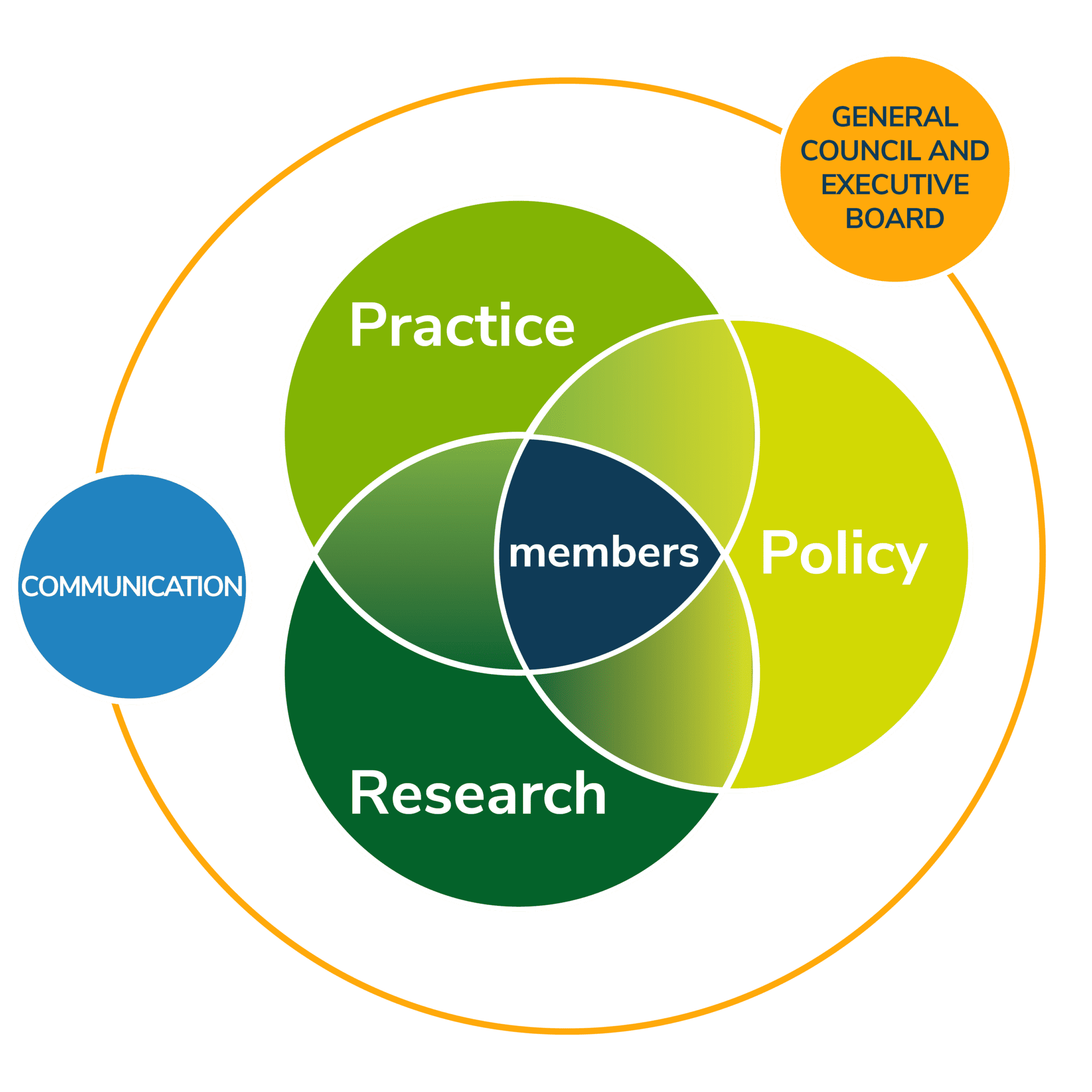
Structuring our work over a policy, a practice, and a research platform, we focus on exploring and strengthening the links between these areas.
Our approach focuses on integrated concepts to health, reducing health inequality gaps and gradients, working on determinants across the life course, whilst contributing to the sustainability and wellbeing of people and the planet.
EuroHealthNet is co-funded by the European Union. However, the information and views set out on this website are those of the author and do not necessarily reflect the official opinion of the European Commission. The Commission does not guarantee the accuracy of the data included on this website. Neither the Commission nor any person acting on the Commission's behalf may be held responsible for the use which may be made of the information contained therein.