



EuroHealthNet Guide for Financing Prevention and Health Promotion
1.1.
Why is investing in prevention and health promotion smart?
Investing in health promotion is not just a moral imperative — it’s economically strategic. Prevention is far less costly than a cure. For example, reducing global deaths from non-communicable diseases (NCDs) by one-third would require an estimated investment of US$140 billion, yet would generate US$2.7 trillion in economic benefits — a return of nearly 20 to 1.
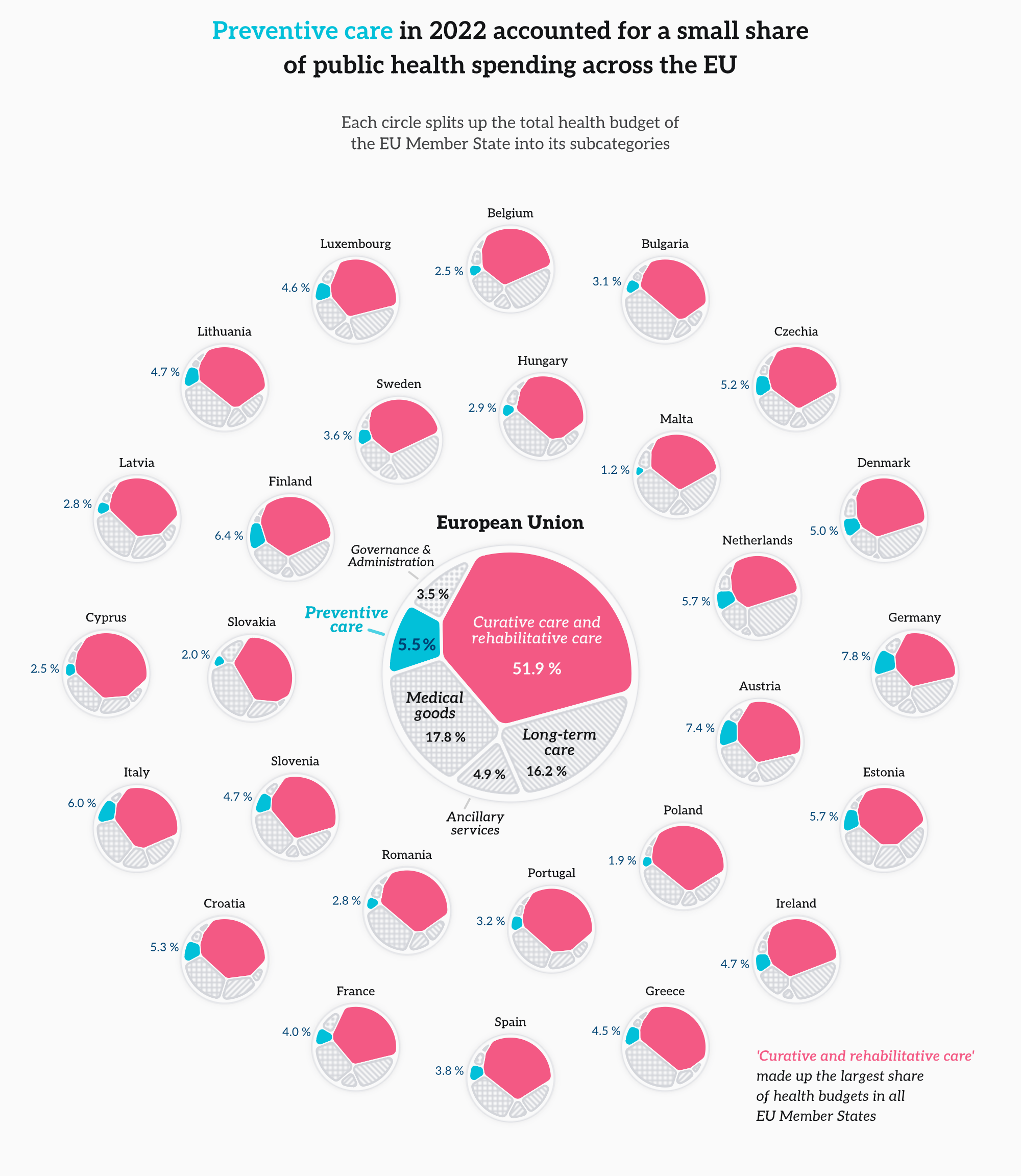
In pandemic prevention, just US$1.30 per person could build the global capacity needed to prevent future outbreaks—compared to the trillions already lost to COVID-19. Yet, Europe invests only around 3% of health budgets in public health and prevention, while the majority of spending goes to treatment and care (European Commission). Meanwhile, the cost of inaction is growing.
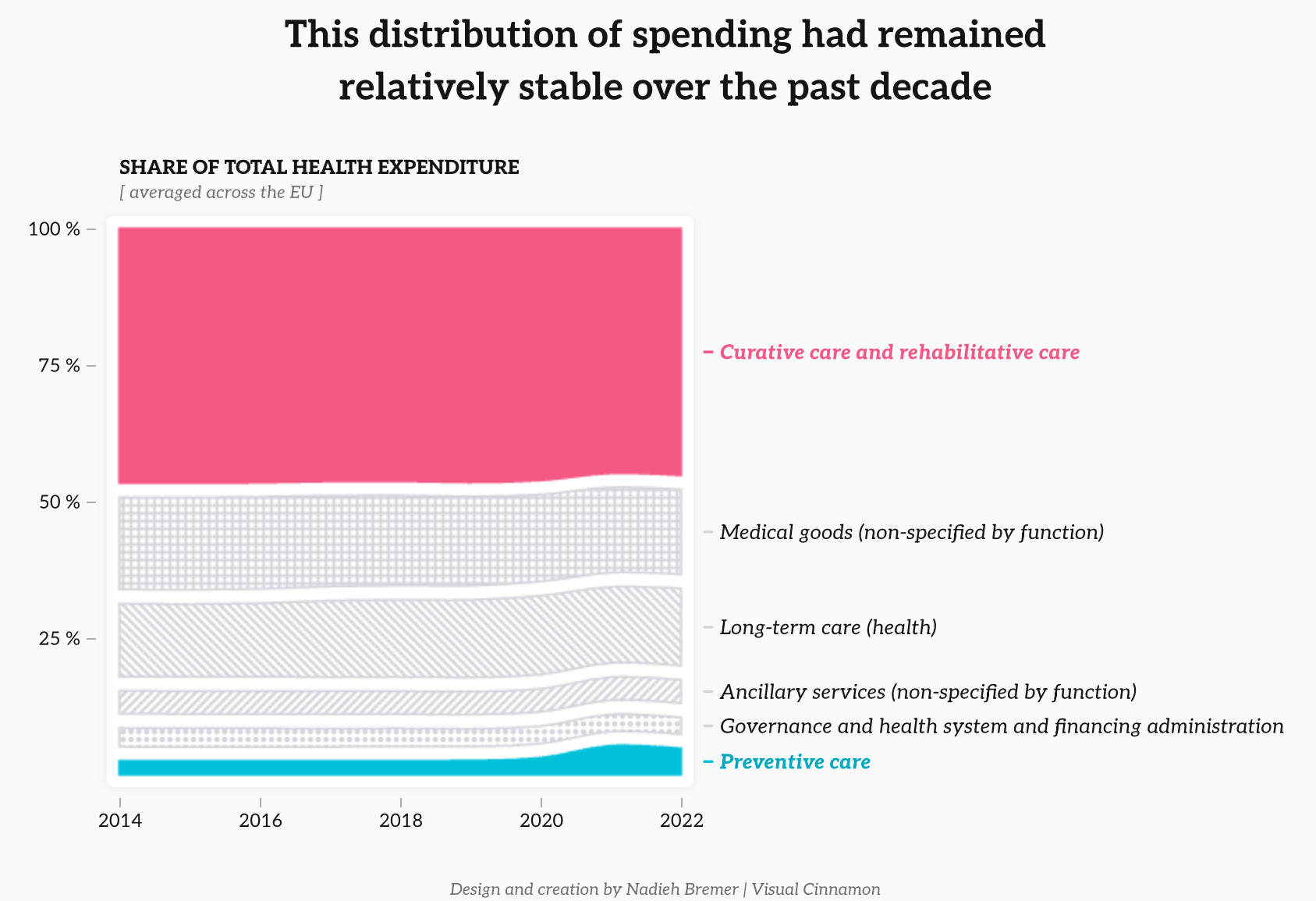
During COVID-19-pandemic, health budgets going towards preventive care in the European Union spiked at an average of 6.2% in 2021 and 5.5% 2022. But even then, curative and rehabilitative care made up the largest share of budgets. Following the pandemic, the EU’s prevention spending dropped back to about 3-4%
Click on the graphs to zoom in, Source
Despite the strong economic case, investment in prevention and health promotion remains limited. Following the COVID-19 surge in public spending, fiscal space is once again shrinking. In early 2024, the EU4Health budget was reduced by €1 billion — a cut of nearly 20% (European Commission, 2024).
Many interventions generate short-term returns, such as reduced absenteeism, improved mental health, lower emergency care use, and greater workforce productivity.
There is also a persistent myth that health promotion yields benefits only in the long term. In reality, many interventions generate short-term returns, such as reduced absenteeism, improved mental health, lower emergency care use, and greater workforce productivity. Still, prevention is often perceived as a trade-off with treatment, rather than a complementary investment.
To change this, communication must evolve. This means translating public health needs into investment-ready proposals, challenging outdated assumptions, and forging stronger alliances between health, finance, and other actors.
Why is investing in prevention at the European Union level not yet self-evident?
Despite strong evidence of its long-term benefits, investment in health promotion and disease prevention is not yet self-evident in EU-level policymaking. This is largely because policy priorities are shaped by two interrelated factors: (1) shifting political priorities and funding pressures and (2) institutional and political barriers within the EU governance system.
1. Shifting political priorities and funding pressures
Since the European Parliament elections in 2024, the EU policy landscape has been strongly influenced by geopolitical instability and changing political priorities. Armed conflicts, economic tensions, and concerns about defence and global alliances have pushed security and resilience to the forefront of EU policymaking. This shift is reflected in the 2024-2029 EU Strategic Agenda, which places strong emphasis on security, competitiveness and resilience rather than advancing health-related objectives.
Budgetary decisions have reinforced this trend. During the mid-term review of the EU Multiannual Financial Framework 2021-2027, EU leaders agreed to redeploy €1 billion (around 20% of the EU4Health budget) to defence, security and support for Ukraine. While these decisions respond to urgent geopolitical pressures, they also reduce the resources available for long-term public health priorities such as health promotion and disease prevention.
2. Institutional and political barriers
Institutional dynamics within the EU also shape the space for prevention-focused investment. The post-2024 EU institutional landscape has become more fragmented and politically constrained, making it more difficult to advance policies that address the upstream determinants of health. A more fragmented European Parliament has increased political resistance to EU-level action on health promotion, disease prevention and the social determinants of health.
Within the European Commission, institutional priorities also influence policy direction. The absence of a Vice-President for the Wellbeing Economy or Health, combined with the growing emphasis on competitiveness and security, signals that upstream public health may receive less strategic attention. Together, these dynamics contribute to a policy environment in which investments in health promotion and disease prevention remain difficult to prioritise.

What's next?
Head to the next section to read how to finance health promotion.
About EuroHealthNet
Building a healthier future for all by addressing the determinants of health and reducing inequalities.
EuroHealthNet is the Partnership of public health agencies and organisations building a healthier future for all by addressing the determinants of health and reducing inequalities. Our focus is on preventing disease and promoting good health by looking within and beyond the health system.
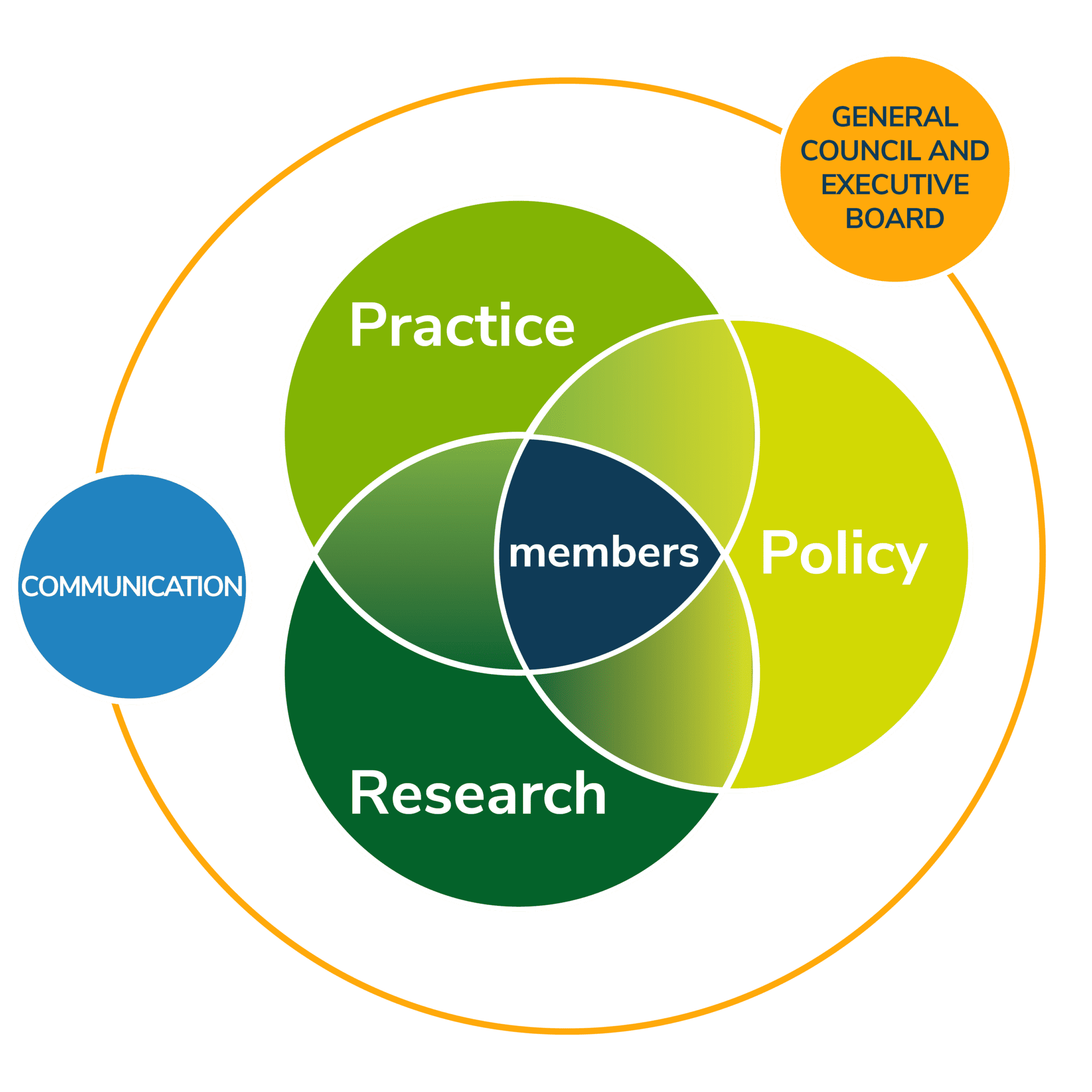
Structuring our work over a policy, a practice, and a research platform, we focus on exploring and strengthening the links between these areas.
Our approach focuses on integrated concepts to health, reducing health inequality gaps and gradients, working on determinants across the life course, whilst contributing to the sustainability and wellbeing of people and the planet.
EuroHealthNet is co-funded by the European Union. However, the information and views set out on this website are those of the author and do not necessarily reflect the official opinion of the European Commission. The Commission does not guarantee the accuracy of the data included on this website. Neither the Commission nor any person acting on the Commission's behalf may be held responsible for the use which may be made of the information contained therein.