



EuroHealthNet Guide for Financing Prevention and Health Promotion
How to get started
Stage 5: Attract and engage investors
This stage supports practitioners and decision-makers in moving from grant-dependent prevention projects to investable, sustainable Smart Capacitating Investment (SCI) models. It explains how health promotion and disease prevention initiatives can attract, engage, and retain a diverse mix of investors, including public authorities, impact and social investors, private-sector partners, and community contributors, without compromising equity, public value, or accountability.
Rather than treating financing as a late-stage technical task, the brief shows how investment design is a strategic process: understanding what different actors value, assessing readiness, structuring credible value propositions, and selecting finance models that align incentives and share risk appropriately. For example, using the SCI Investment and Finance Model Toolkit, readers learn how to systematically translate prevention outcomes into forms of value that investors recognise and are willing to support.
This section is practical and action-oriented. It guides readers with a step-by-step process and proposes concrete tools to assess investment readiness, identify suitable investor types, design blended finance arrangements, and build a credible investment case, enabling prevention initiatives to secure long-term financing while safeguarding public interest and health equity.
What you will learn
- Identify which types of investors (public, impact, private, community, citizen) are relevant for your intervention.
- Recognise what motivates different investor groups and how they define value.
- Assess whether your initiative is investment-ready, and where gaps may deter funders.
- Select financing and investment models that match stakeholder motivations and risk profiles.
- Design risk-sharing and governance arrangements that build investor confidence while protecting equity and public value.
Key concepts and rationale
Across Europe, health promotion and disease prevention remain structurally underfunded, not because they lack effectiveness, but because they do not fit easily within conventional funding and investment models. Prevention generates value over time, across sectors, and for multiple beneficiaries, while traditional financing mechanisms tend to be short-term, siloed, and focused on treatment (outcomes) and single payers.
Prevention generates value over time, across sectors, and for multiple beneficiaries, while traditional financing mechanisms tend to be short-term, siloed, and focused on treatment (outcomes) and single payers.
Smart Capacitating Investment addresses this mismatch by reframing prevention as a shared-value investment opportunity, rather than a narrow health expenditure. This is particularly relevant for complex, cross-sectoral prevention initiatives, such as those addressing social determinants of health, mental wellbeing, or healthy ageing, where the benefits are distributed across systems and no single actor has an obvious mandate or incentive to fund alone. For these initiatives, SCI recognises that financing can be drawn from multiple actors: public budgets, impact capital, private-sector resources, and community contributions, each motivated by different forms of value. Combining these sources in flexible investment ecosystems is a novel and promising approach to closing the prevention funding gap.
SCI attracts investors by making four dynamics explicit:
A. From single funders to mixed investor ecosystems
SCI assumes that different actors invest for different reasons. Public authorities may seek policy impact and long-term cost containment; impact investors may prioritise measurable social outcomes; private-sector partners may engage where there is a business, workforce, or ESG case; communities and individuals may contribute time, trust, or small-scale funding for visible local benefits.
B. From implicit benefits to explicit value propositions
SCI makes value visible and structured. It clarifies who benefits, how, and when, translating prevention outcomes into fiscal savings, operational efficiencies, workforce benefits, social impact, or reputational gains, depending on the stakeholder.
C. From unmanaged risk to deliberate risk-sharing arrangements
Prevention is often perceived as risky because outcomes emerge over time and depend on multiple factors. SCI responds by allocating risk intentionally: public bodies may commission or guarantee outcomes, impact investors may provide risk-tolerant or first-loss capital, and private actors may engage once uncertainty is reduced.
D. From financial capital to capacitating contributions
SCI recognises that money alone is insufficient. Data, expertise, infrastructure, governance capacity, and trusted community relationships are critical investment components. These non-financial contributions often increase effectiveness, legitimacy, and attractiveness for financial investors.
In summary, SCI does not ask investors to change their motivations. It designs prevention in a way that accommodates them, while embedding governance and ethical safeguards to ensure that investments serve public interest, equity, and long-term wellbeing.
Practical steps
A custom tool developed during the Invest4Health project, the SCI Investment and Finance Model Toolkit, supports us with attracting and engaging investors. It consists of five core tools, designed to be used sequentially. In practice, teams may iterate between steps as new information emerges or stakeholder feedback is incorporated. The toolkit is primarily intended for project teams, commissioners, and delivery organisations, with support from coaches or intermediaries where available.
Overview of the toolkit tools
i. Readiness assessment
ii. Stakeholder map
iii. Stakeholder Value Matrix
iv. SCI Flowchart (investment model archetypes)
v. SCI Taxonomy
Key messages and next steps
Attracting and engaging investors for prevention initiatives is rarely a single conversation — it is an iterative process of building trust, demonstrating value, and designing arrangements that work for multiple actors.
A few principles to keep in mind:
- SCI does not depend on finding one "ideal" investor. It works by matching different investor motivations to appropriate tools, sharing risk transparently, recognising non-financial contributions, and embedding strong governance and ethical safeguards throughout.
- Readiness matters, but does not need to be perfect. Early conversations with investors can help shape the model — full investment readiness is a direction of travel, not a starting condition.
- A clear value proposition and transparent risk-sharing logic are the foundation of any credible investor engagement.
Next: Stage 6 — Measuring Impact and Demonstrating Value
Securing investment is only part of the challenge. Once an initiative is funded, demonstrating that it delivers on its promises is what keeps partners engaged and funding flowing. Stage 6 explores how to design robust measurement frameworks, communicate results to diverse audiences, and use evidence to sustain and scale your initiative over time.
What comes next?
About EuroHealthNet
Building a healthier future for all by addressing the determinants of health and reducing inequalities.
EuroHealthNet is the Partnership of public health agencies and organisations building a healthier future for all by addressing the determinants of health and reducing inequalities. Our focus is on preventing disease and promoting good health by looking within and beyond the health system.
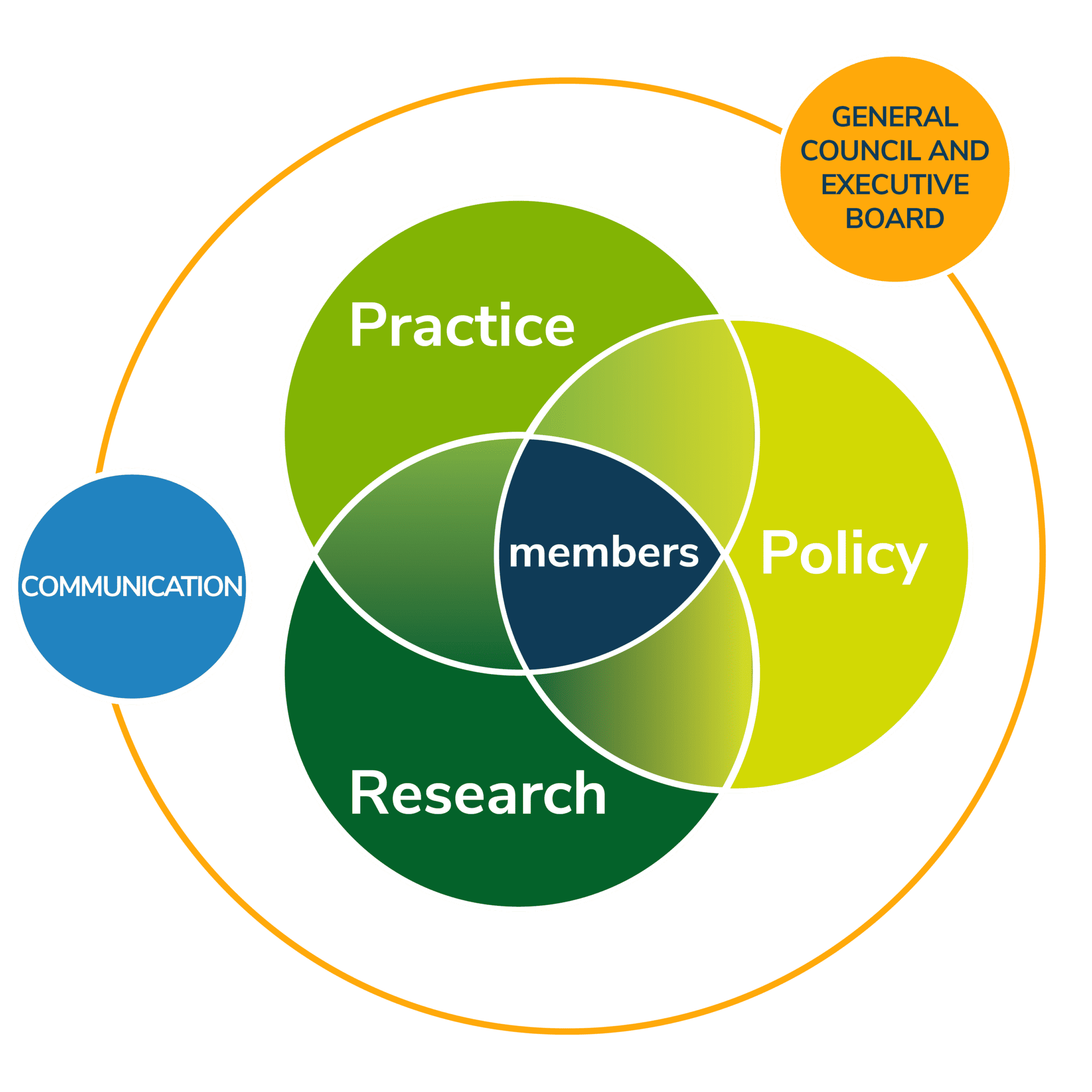
Structuring our work over a policy, a practice, and a research platform, we focus on exploring and strengthening the links between these areas.
Our approach focuses on integrated concepts to health, reducing health inequality gaps and gradients, working on determinants across the life course, whilst contributing to the sustainability and wellbeing of people and the planet.
EuroHealthNet is co-funded by the European Union. However, the information and views set out on this website are those of the author and do not necessarily reflect the official opinion of the European Commission. The Commission does not guarantee the accuracy of the data included on this website. Neither the Commission nor any person acting on the Commission's behalf may be held responsible for the use which may be made of the information contained therein.