



2.2.2
Mobilising community assets
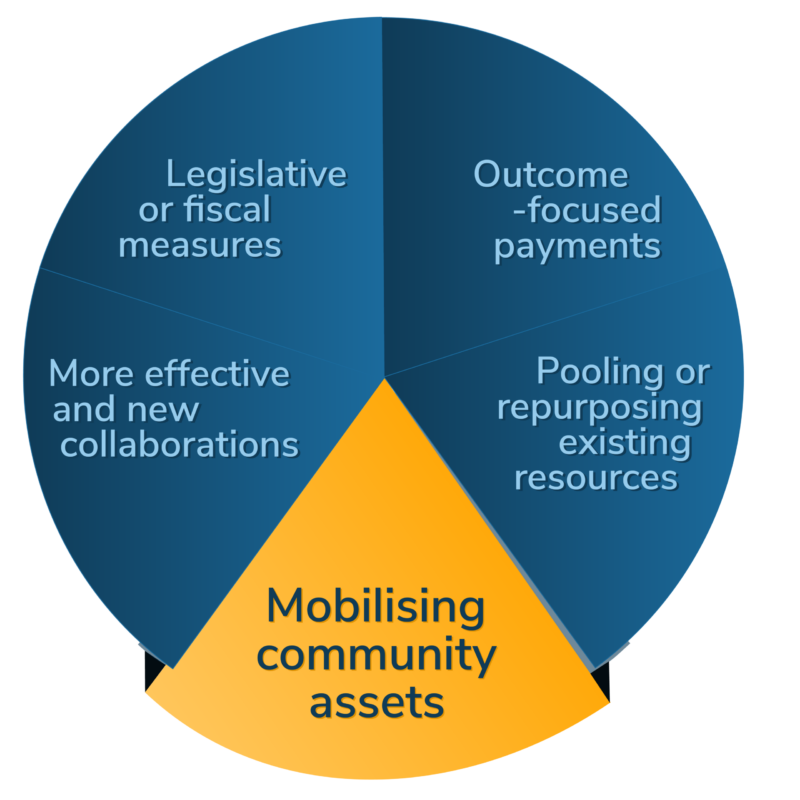
Mobilising community assets is a set of strategies that builds on the resources, relationships, and skills already present within communities to support health and wellbeing. Rather than relying solely on institutional or top-down funding models, this approach taps into the collective power of individuals, civil society organisations, local businesses, and networks to co-create and finance solutions that respond to local health needs.
What community asset mobilisation looks like
Community asset mobilisation can take many forms. It may include financial contributions such as crowdfunding or microcredit schemes; time-based exchanges like timebanking; or non-financial support through volunteering, knowledge sharing, or donation of materials.
These models often emerge from the grassroots but can also be supported or scaled through partnerships with public authorities, social enterprises, and international organisations. Social enterprises, for instance, can be key local actors that bridge business and community goals by reinvesting profits to support health-focused services and initiatives within the local population.
Crowdfunding
is the practice of funding a project or a venture by raising small amounts of money from a large number of people, typically via the Internet. Crowdfunding can be an alternative way to raise money to finance projects, start-up businesses or charitable initiatives.
Microcredit
is the practice of funding a project or a venture by raising small amounts of money from a large number of people, typically via the Internet. Crowdfunding can be an alternative way to raise money to finance projects, start-up businesses or charitable initiatives.
Timebanking
is a system in which people exchange services using time rather than money as currency. One hour of work earns one time credit, which can then be spent on receiving services from others in the network.
Citizen-driven cooperatives
are member-owned, democratically-controlled enterprises that allow a community to pool resources and make collective decisions to meet shared social, economic, and health needs while reinvesting all surpluses back into local initiatives.
Zooming in on finance labels
Through the label, the individual investor knows that all of their invested capital or a certain proportion – depending on the type of fund – serves directly or indirectly to finance programmes, services, or organisations that lead to improved health and wellbeing for all.
In a context of rising demand and constrained public budgets, tapping into community-based resources can help fill gaps and enable communities to play an active role. This strengthens community-driven initiatives by ensuring that financial resources are directly aligned with local health priorities and needs.
Related case studies

Operation 15+15+15 by DoucheFLUX

Ethical financing label in France

United Kingdom’s microcredit as a public health initiative
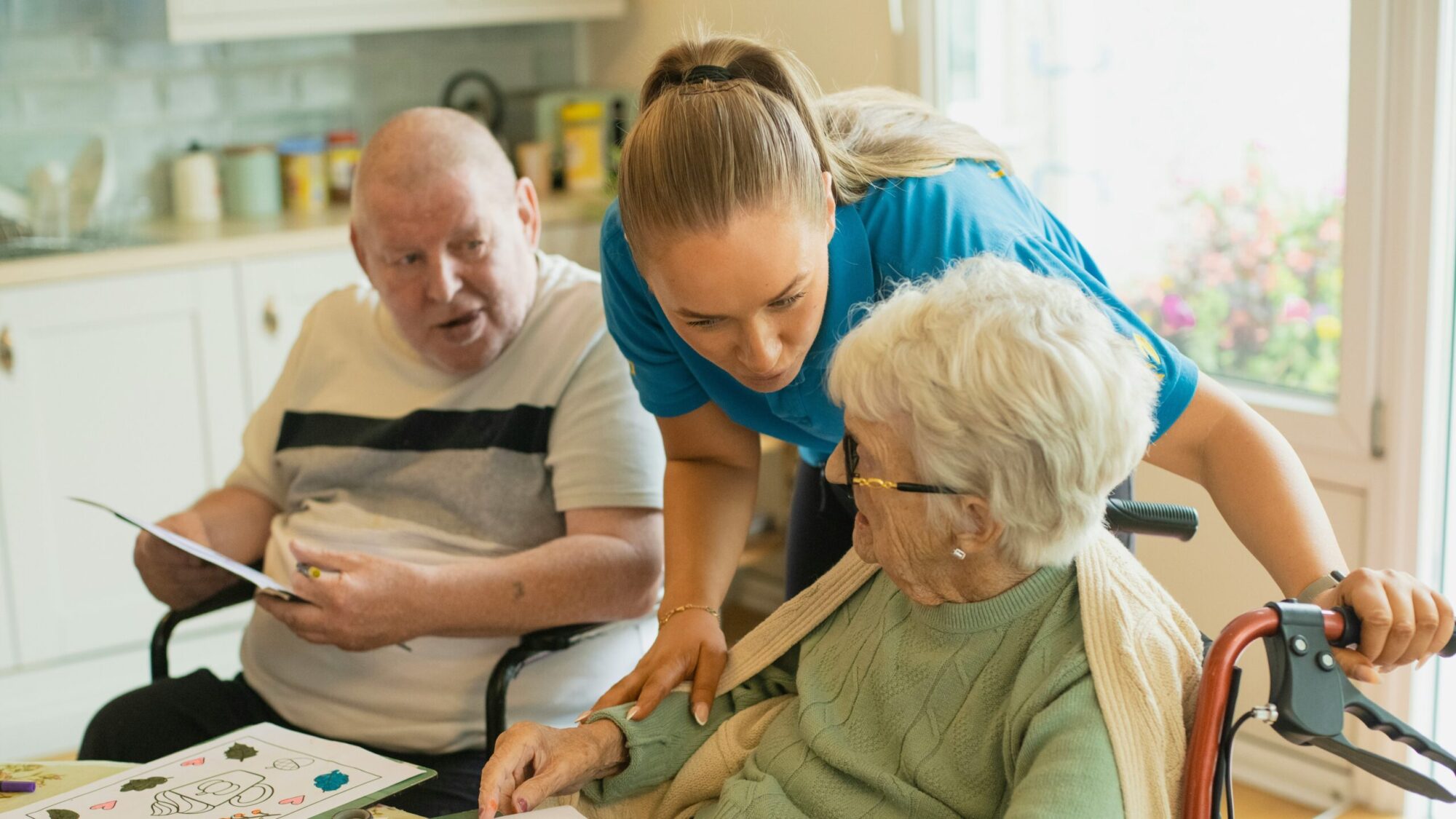
Timebanking and the co-production of preventive social care with adults
Related case studies on social entreprises

Workplace health promotion to facilitate physical activity among office workers in Sweden

Social Enterprise and Health and Well-being Impacts
About EuroHealthNet
Building a healthier future for all by addressing the determinants of health and reducing inequalities.
EuroHealthNet is the Partnership of public health agencies and organisations building a healthier future for all by addressing the determinants of health and reducing inequalities. Our focus is on preventing disease and promoting good health by looking within and beyond the health system.
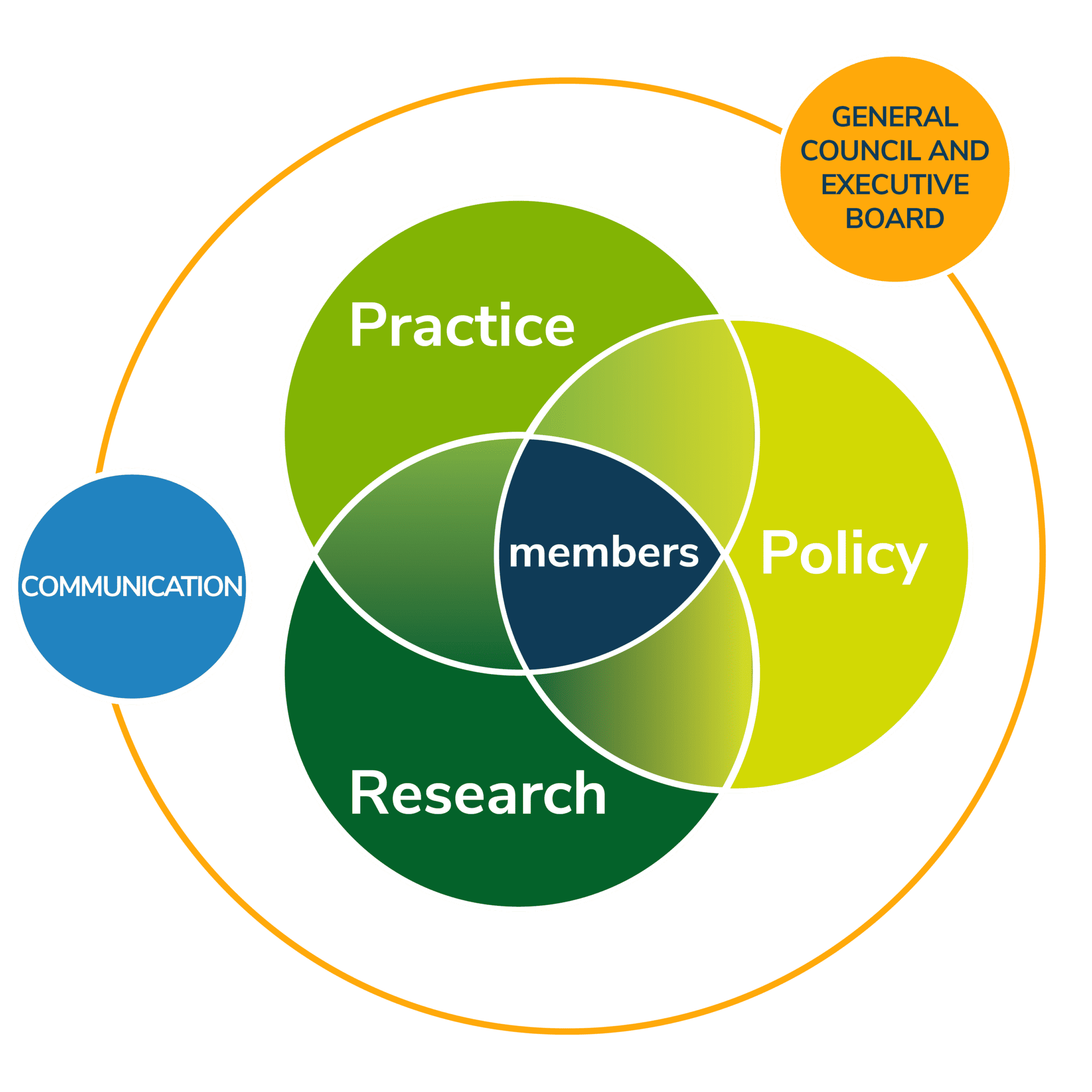
Structuring our work over a policy, a practice, and a research platform, we focus on exploring and strengthening the links between these areas.
Our approach focuses on integrated concepts to health, reducing health inequality gaps and gradients, working on determinants across the life course, whilst contributing to the sustainability and wellbeing of people and the planet.
EuroHealthNet is co-funded by the European Union. However, the information and views set out on this website are those of the author and do not necessarily reflect the official opinion of the European Commission. The Commission does not guarantee the accuracy of the data included on this website. Neither the Commission nor any person acting on the Commission's behalf may be held responsible for the use which may be made of the information contained therein.