



EuroHealthNet Guide for Financing Prevention and Health Promotion
Reports and publications
This page brings together a selection of key reports and publications that underpin the content of this guide. These core resources provide deeper insights into the concepts, approaches, and evidence behind innovative financing for health and social outcomes.
For further reading and publications, you can also explore EuroHealthNet’s website, which offers extensive resources on these topics.

Broadening sources of finance for health promotion and disease prevention: Smart capacitating investment
EuroHealthNet colleagues have co-authored a scientific paper titled “Broadening sources of finance for health promotion and disease prevention: Smart Capacitating Investment.” The paper explores existing and emerging SCI models that could generate additional resources to support health promotion and prevention efforts.
SCIs have been proposed as a way to mobilise additional public and private investment in health promotion and disease prevention. They are increasingly recognised as tools to sustainably strengthen individual and community capacity for healthier behaviours and to address broader determinants of health.
Findings show that Social Impact Bonds were the most frequently applied model across all levels of prevention. The article also provides a classification and typology of SCI models, highlighting the wide range of approaches and their potential to drive meaningful change, particularly if supported by government to attract private capital and ensure rigorous evaluation.
Read the full article here.

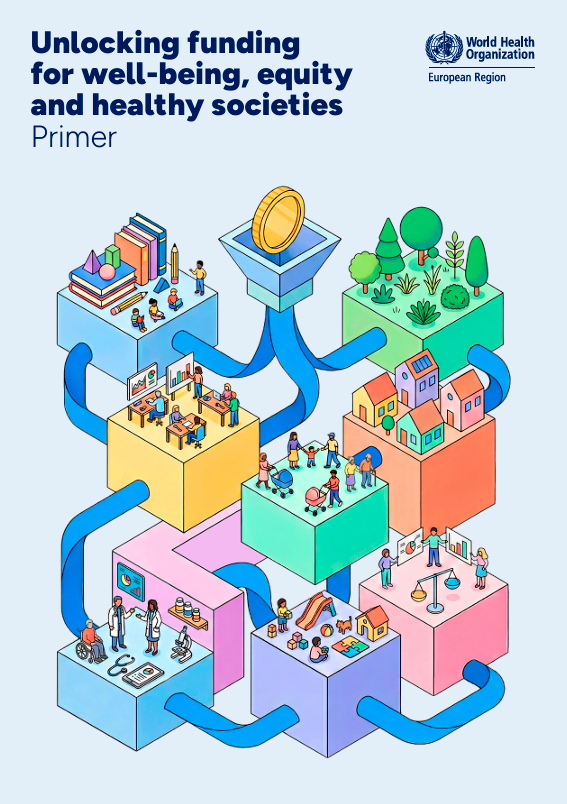
WHO Unlocking funding for well-being, equity and healthy societies primer
This primer written by the World Health Organization examines how countries in the WHO European Region can mobilize sustainable financing for health and well-being amid mounting fiscal pressures and structural transitions.
It introduces the well-being economy as a framework for targeted debate on fiscal reform, innovative financial instruments and impact-oriented investment models. A range of taxation strategies, blended finance approaches and outcomes-based mechanisms are explored to assess how public, private and philanthropic capital can be aligned to fund prevention, address the social determinants of health, and strengthen equitable public services.
Innovative financing for prevention in the Netherlands: from healthcare costs to health gains
Authors: Ruben Koekoek, Lucas Voesten, Jeantine van der Feest, Linda Kokke
This report by Social Finance NL in collaboration with Rabobank and Invest-NL, examines how the Netherlands can rebalance healthcare spending toward prevention to safeguard affordability and access.
Amid rising expenditures, widening workforce shortages and persistently low investment in preventive care, the report calls for structural reforms in financing, governance and accountability. It outlines concrete proposals — including regional health funds, a National Prevention Results Fund and outcomes-based financing models such as Health Impact Bonds — to shift the system from treating illness to investing in measurable health gains.

A protocol for mobilising novel finance models for collaborative health promotion and disease prevention initiatives: taking a smart capacitating investment approach in the Invest4Health project
This article, co-authored by EuroHealthNet, explores how Smart Capacitating Investments (SCI) can rebalance public health financing toward prevention, addressing the low investment in health promotion across the EU.
Facing rising NCD rates, limited prevention budgets, and post-COVID fiscal constraints, the paper introduces the Invest4Health (I4H) project as a solution. It proposes innovative SCI models—such as cross-sectoral collaboration, outcomes-based financing, and real-world piloting in Sweden, Germany, Spain, and Wales—to shift focus from treatment to measurable health gains. The article also presents a roadmap for scaling SCI, aiming to attract sustainable investment and improve population well-being.
WHO technical manual on alcohol tax policy and administration
The WHO technical manual on alcohol tax policy and administration is a practical guide and a call to action for policymakers and others involved in alcohol tax policymaking to develop strong policies considering each country's unique market structure, tax administration capacity, and political economy. It also includes country case studies and summaries of evidence on alcohol tax globally.
Economics of Healthy and Active Ageing Series
In this series, The European Observatory on Health Systems and Policies investigate key policy questions associated with population ageing, bringing together findings from research and country experiences. It reviews what is known about the health and long-term care costs of older people, and consider many of the economic and societal benefits of healthy ageing. Some key publications in the series are:
- Health and social care near the end of life: can policies reduce costs and improve outcomes?
- Sustainable health financing with an ageing population: will population ageing lead to uncontrolled health expenditure growth?
- Sustainable health financing with an ageing population: implications of different revenue raising mechanisms and policy options
Study on the benefits of using social outcome contracting in the provision of social services and interventions
Authors: Luka Klimavičiūtė (PPMI), Veronica Chiodo (Politecnico di Milano), Benedetta De Pieri (Politecnico di Milano), Vaida Gineikytė (PPMI)
Social outcome contracts (SOCs) is a relatively new type of mechanism in public service procurement. It focuses on harnessing the resources of the public, private, philanthropy and civil society sectors, with the goal of jointly implementing effective interventions in the public domain.Nevertheless, little empirical research exists that compares SOC models with traditional financing mechanisms such as subsidies, grants, fee-for-service contracts, block contracts and in-house delivery.
The study therefore aims to assess the effectiveness and efficiency of outcomes-based contracts in comparison to interventions delivered under traditional financing, as well as evaluating the outcome measurement methods applied to determine their impact. The study focuses exclusively on social services rather than public services more generally. The annex details 15 selected social outcomes contracting schemes

Use of social impact bonds in financing health systems responses to noncommunicable diseases: scoping review
Authors: Emily Susannah Grace Hulse, Rifat Atun, Barbara McPake, John Tayu Lee
This is the first scoping review that explores the evidence of Social Impact Bonds (SIBs) for non-communicable diseases (NCDs) and their key characteristics and performance. A total of 11 SIBs implemented in eight countries worldwide were analysed. Three SIBs focused on diabetes, two SIBs on mental health and two SIBS on cancer, while the rest of the SIBs had a different NCD focus including hypertension, asthma and long-term conditions. The review revealed a lack of empirical evidence on SIBs for NCDs. Overall, there is a need for more high-quality studies, particularly economic evaluations and qualitative studies on the benefits to target populations, and greater transparency from the private sector, in order to ensure improved SIBs for preventing NCDs.
The full report can be found here
Investing in Effective, Inclusive and Resilient Health and Social Care Systems in Europe
In July 2021, EuroHealthNet contributed to a technical brief "Investing in Effective, Inclusive and Resilient Health and Social Care Systems in Europe" published by the Council of Europe Development Bank. This brief argues that a more integrated approach to healthcare investments would increase the effectiveness, inclusiveness and resilience of European healthcare systems.
Financing Health Promoting Services: an Information Guide
In September 2019, EuroHealthNet first launched an information guide for financing health promoting services. It demonstrates how to make transitions from spending on cures and treatments to investing in preventative approaches for better health and wellbeing. It explores how resources and capacities can be mobilised to help finance these transitions and contribute to an ‘economy of wellbeing’.
This publication served as a base for the development of this e-guide.
How to make the case for sustainable investment in well-being and health equity
Urgent action is needed to address the growing health, inequity, economic and environmental challenges that threaten the wellbeing of present and future generations. Current investment policies and practices are unsustainable and result in high human, social, economic and environmental costs. There is already a clear commitment and concerted action, across the WHO European Region and globally, to tackle these pressures and to drive sustainable development and prosperity for all. National and local governments can play a major role in this.
This guide outlines the step-by-step process of how to synthesize, translate and communicate public health and health economics evidence into policy and practice, making the case for sustainable investment in well-being and health equity. It is intended to help key stakeholders, advocates for health and equity, civil servants and other health and non-health professionals who have a role in informing, influencing or shaping national and sub-national policy and practice.
Financing across sectors for sustainable development
Developed by the United Nations Development Programme (UNDP) and the London School of Hygiene and Tropical Medicine-supported STRIVE Research Consortium (STRIVE) with support from the Government of Japan, ‘cross-sectoral co-financing’ or simply ‘co-financing’ offers a new and more efficient way to budget for high-value/impact interventions that deliver benefits across multiple sectors, SDGs and SDG targets simultaneously.
Health Sector Study EU Final Report
This EU-wide Health Sector Study was designed to support the European Investment Advisory Hub, the EIB and the European Commission’s Directorate General for Health and Food Safety (DG SANTE), in promoting sustainable investment in Europe’s healthcare sector. The study looked to discover and evaluate optimal approaches, tools and financing schemes for investments to support the implementation of priority EU healthcare policies and reforms. The defining purpose of the study is an exploration, across EU Member States, of the gaps in healthcare investment, the barriers leading to those gaps and the reasons why the health sector investment needs and priorities are not being appropriately addressed.
This report focuses on the health care sector, but provides lessons that are also useful for public health, health promotion and disease prevention professionals.
European Structural Investment Funds for Health
The ESI Funds for Health project mapped and assessed more than 7,000 health-related projects supported by the European Structural and Investment (ESI) Funds during the first four years of the 2014-2020 spending period. This report contains a summary of the key outcomes emerging from this 2-year project. It has been produced by a consortium including EuroHealthNet.
Social Impact Investment in the EU. Financing strategies and outcome oriented approaches for social policy innovation: narratives, experiences, and recommendations
In view of the changes in the structure, governance and modes of implementation of EU investment programmes, this study explores the further development of a social impact investment market. The analysis sets the ground for future research directions on how to finance strategies and outcomes-oriented approaches for a new generation of innovative social policies.
Outcomes based investment with third-party certification of measurable health impact, satisfy the private sector need for return with social interest objectives.
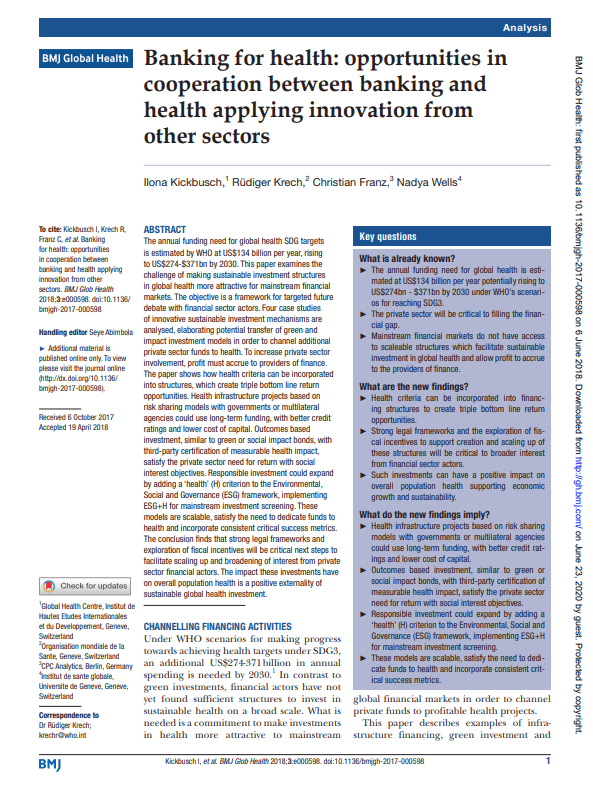
Banking for health: opportunities in cooperation between banking and health applying innovation from other sectors
Authors: Ilona Kickbusch, Rüdiger Krech, Christian Franz & Nadya Wells
This paper examines the challenge of making sustainable investment structures in global health more attractive for mainstream financial markets. The objective is a framework for targeted future debate with financial sector actors. Four case studies of innovative sustainable investment mechanisms are analysed, elaborating potential transfer of green and impact investment models in order to channel additional private sector funds to health.
Outcomes based investment with third-party certification of measurable health impact, satisfy the private sector need for return with social interest objectives.
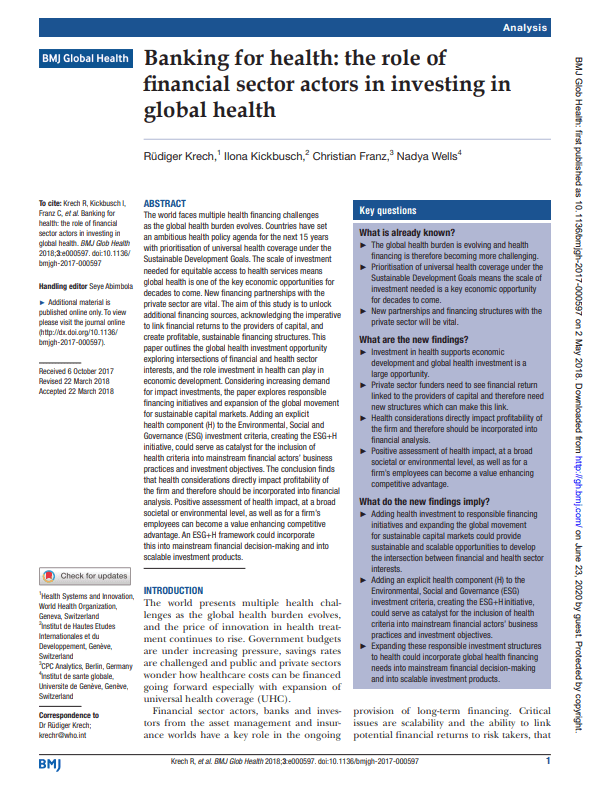
Banking for health: the role of financial sector actors in investing in global health
Authors: Rüdiger Krech, Ilona Kickbusch, Christian Franz, Nadya Wells
This paper analyses the investment opportunity in health. Evidence that health conditions directly affect the profitability of the firm demonstrates financiers and investors should incorporate this into their models. Insurance companies who are already experts at including environmental and health risks in their pricing models could provide valuable insights into how to incorporate these measures into other financial sector business models and reporting.
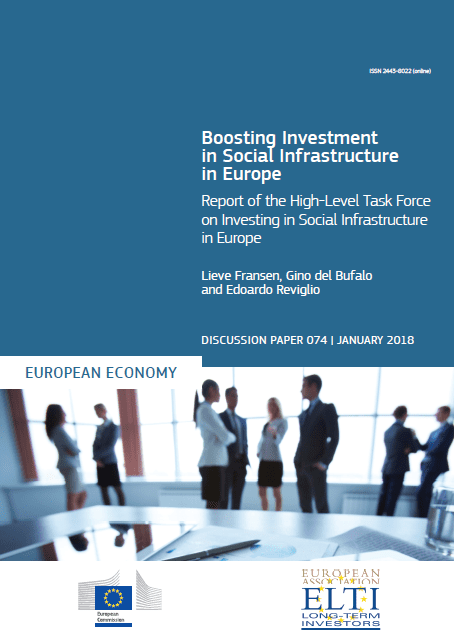
Boosting Investment in Social Infrastructure in Europe
The High-Level Task Force (HLTF) on Investing in Social Infrastructure in Europe was initiated by the European Long-Term Investors Association (ELTI). Its mission was to raise political attention to the crucial role of social infrastructure and related services, aiming to enhance public and private investments in this sector. Long-term, flexible and efficient investment in education, health and affordable housing is considered essential for the economic growth of the European Union (EU), the well-being of its people and a successful move towards upward convergence in the EU.
This final report contains a comprehensive collection of facts and figures on social infrastructure and social services and the related financing needs. Based on the conclusions and results, the report formulates concrete recommendations aimed at enhancing current financing tools as well as for future schemes and initiatives in the social sector.
The Social Protection Committee: A Voluntary European Quality Framework for Social Services
The Voluntary European Quality Framework for Social Services provides guidance on how to define, provide, assess and improve social services (2008). Many of the criteria are touched upon throughout our e-Guide.
About EuroHealthNet
Building a healthier future for all by addressing the determinants of health and reducing inequalities.
EuroHealthNet is the Partnership of public health agencies and organisations building a healthier future for all by addressing the determinants of health and reducing inequalities. Our focus is on preventing disease and promoting good health by looking within and beyond the health system.
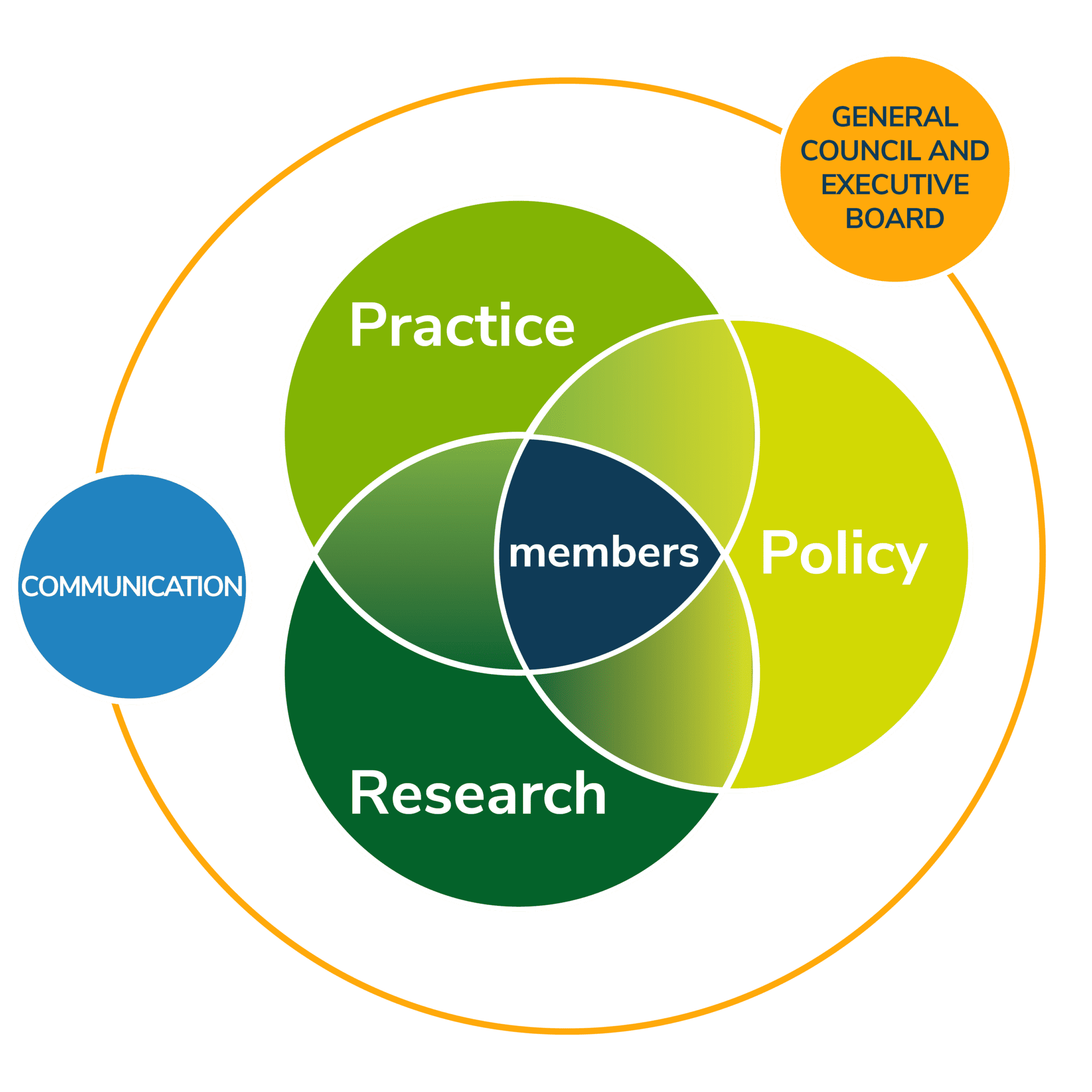
Structuring our work over a policy, a practice, and a research platform, we focus on exploring and strengthening the links between these areas.
Our approach focuses on integrated concepts to health, reducing health inequality gaps and gradients, working on determinants across the life course, whilst contributing to the sustainability and wellbeing of people and the planet.

EuroHealthNet is co-funded by the European Union. However, the information and views set out on this website are those of the author and do not necessarily reflect the official opinion of the European Commission. The Commission does not guarantee the accuracy of the data included on this website. Neither the Commission nor any person acting on the Commission's behalf may be held responsible for the use which may be made of the information contained therein.