



EuroHealthNet Guide for Financing Prevention and Health Promotion
How to get started
Stage 6: Measure outcomes and impact
This stage aims to support decision-makers and practitioners in designing Smart Capacitating Investment (SCI) initiatives that remain credible, fundable, and scalable over time by demonstrating their value through robust impact measurement. While attracting initial funding is critical, health promotion and prevention initiatives often fail to sustain financing because their benefits are insufficiently measured, poorly communicated, or misaligned with funder decision cycles.
Different stakeholders require different forms of evidence to justify continued investment. Public authorities may need proof of population health gains, equity impacts, and long-term budget sustainability. Investors and funders look for credible outcome metrics, risk reduction, and evidence of value for money. Service providers need data that supports learning and operational improvement. Communities expect to see tangible improvements in lived experience.
SCI does not promote measurement for its own sake. Instead, it provides structured ways to define outcomes, select indicators, and generate evidence that makes prevention visible, comparable, and defensible in funding and policy decisions. This brief explains how to move to deliberate impact design ensuring that evidence supports renewal, scaling, and diversification of funding while safeguarding equity and public interest.
What you will learn
- Define indicators that capture capacity building, prevention outcomes, and equity impacts, not just short-term outputs.
- Select indicators that are meaningful for funders, policymakers, providers, and communities.
- Use economic tools such as cost–benefit analysis and Social Return on Investment (SROI) to translate outcomes into decision-relevant value.
Key concepts and rationale
For Smart Capacitating Investment (SCI) initiatives, measurement is not an optional technical add-on; it is the mechanism through which health promotion and disease prevention remain visible, credible, and fundable over time. Unlike acute or curative care, preventive and health-promoting interventions generate benefits that unfold gradually, cut across multiple sectors, and are often only partially captured in financial terms. When these effects are not systematically measured and communicated, prevention is easily displaced by short-term pressures, electoral cycles, and siloed budgeting practices.
Traditional evaluation approaches in health policy have tended to prioritise clinical outcomes or cost-effectiveness within the healthcare system. While these methods remain important, they are often insufficient for SCI initiatives because they overlook the broader forms of value that prevention creates. These include the strengthening of individual, community, and system capacity; improvements in equity and access; and positive spillovers into education, employment, social care, and community cohesion. As a result, interventions that are socially valuable and strategically important may appear weak or inconclusive when assessed through narrow evaluative lenses.
SCI therefore calls for proportionate and multidimensional evaluation grounded in core economic and public value principles. Decision-makers face scarcity and opportunity costs: investing in prevention means choosing it over other uses of public or philanthropic resources, which requires credible comparisons between alternatives. Efficiency matters, not only in terms of cost minimisation but in relation to the health and societal gains achieved. Equity considerations are central, since preventive interventions can either reduce or reinforce existing inequalities depending on who benefits and who bears the costs. Value for money must be assessed over time and across sectors, recognising that returns may not accrue to the same actors who invest upfront.
Unlike acute or curative care, preventive and health-promoting interventions generate benefits that unfold gradually, cut across multiple sectors, and are often only partially captured in financial terms.
Within SCI, measurement is treated as a strategic function rather than a compliance exercise. Different actors rely on different forms of evidence, and evaluation must be capable of speaking to all of them without distorting priorities. Public authorities typically look for population-level outcomes, equity impacts, accountability, and long-term fiscal sustainability. Funders and investors require credible outcome metrics, signals of predictable performance, and reassurance that risks are being managed responsibly. Service providers need data that supports learning, quality improvement, and stable commissioning arrangements. Communities, meanwhile, value evidence that reflects lived experience, tangible improvements in daily life, and fair treatment.
No single evaluation method can satisfy all of these needs simultaneously. SCI therefore promotes fit-for-purpose evaluation, in which methods are selected and combined based on the nature of the intervention, the decisions at stake, and the maturity of the evidence base. Economic evaluation methods, such as cost-effectiveness or cost–benefit analysis, can support comparisons and resource allocation decisions when outcomes can reasonably be quantified or monetised. Social valuation approaches, including Social Return on Investment, help capture broader social, health, and equity value that would otherwise remain invisible. Multi-criteria approaches, such as Multi-Criteria Decision Analysis, make trade-offs explicit when multiple objectives and stakeholder priorities must be balanced.
The aim is not methodological sophistication for its own sake, but decision-relevant evidence that supports funding choices, enables adaptive learning, and safeguards the public interest. When designed well, evaluation strengthens investment readiness, underpins outcome-based financing, and provides both the narrative and the numbers needed to sustain long-term investment in health promotion and disease prevention.
Practical steps
Related case studies

Workplace health promotion to facilitate physical activity among office workers in Sweden
Key messages and next steps
- Prevention stays funded when its value is measurable, credible, and visible, communicated in the right language to the right audiences.
- In SCI, measurement is a strategic tool for sustainability and learning, not a compliance exercise. Building responsibilities, data systems, and learning cycles into delivery from the start makes the difference.
What comes next?
About EuroHealthNet
Building a healthier future for all by addressing the determinants of health and reducing inequalities.
EuroHealthNet is the Partnership of public health agencies and organisations building a healthier future for all by addressing the determinants of health and reducing inequalities. Our focus is on preventing disease and promoting good health by looking within and beyond the health system.
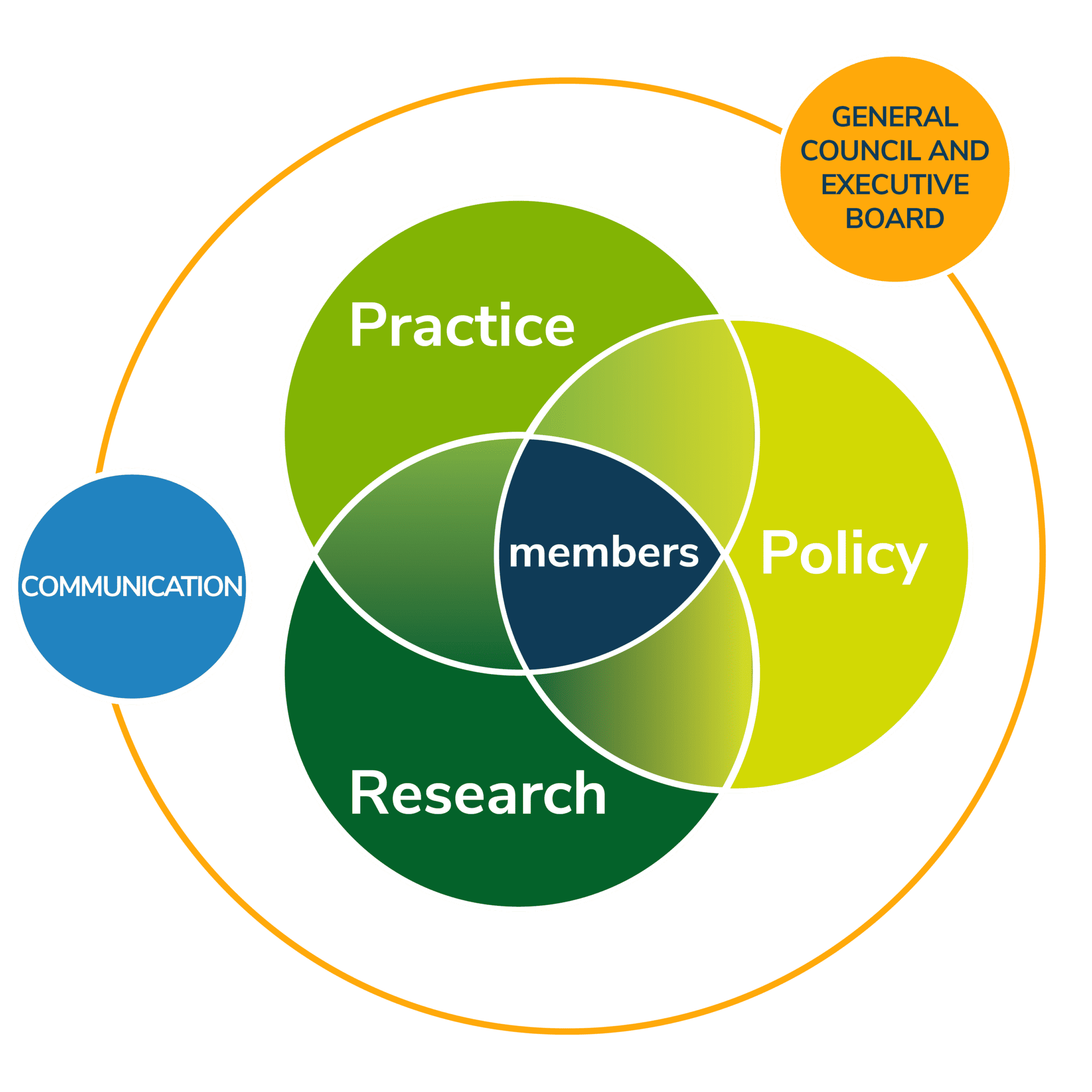
Structuring our work over a policy, a practice, and a research platform, we focus on exploring and strengthening the links between these areas.
Our approach focuses on integrated concepts to health, reducing health inequality gaps and gradients, working on determinants across the life course, whilst contributing to the sustainability and wellbeing of people and the planet.

EuroHealthNet is co-funded by the European Union. However, the information and views set out on this website are those of the author and do not necessarily reflect the official opinion of the European Commission. The Commission does not guarantee the accuracy of the data included on this website. Neither the Commission nor any person acting on the Commission's behalf may be held responsible for the use which may be made of the information contained therein.