



EuroHealthNet Guide for Financing Prevention and Health Promotion
3.
How you can get started
This section provides practical guidance and tools to help you conceptualise and implement alternative financing approaches for health promotion and disease prevention.
There is no single model that fits all contexts. Instead, this section draws on the experience of the Invest4Health consortium to present a flexible pathway that can be adapted to different settings, capacities, and policy environments. It introduces Smart Capacitating Investment (SCI) and outlines how it can be applied in practice to move from ideas to implementation.
What is Smart Capacitating Investment (SCI)?
Smart Capacitating Investment (SCI) involves unconventional investments, financial or non-financial, in health promotion and disease prevention (HPDP). These investments may consist of new resources or resources reallocated towards enhancing health promotion and disease prevention. All forms of SCI aim to enhance individual and community capacity for healthier behaviours, address health determinants, and promote sustainable change while reducing health inequalities.
Smart Capacitating Investment models can be broadly grouped into financial and non-financial approaches. While financial models mobilise capital to deliver measurable social and economic value, non-financial models strengthen the social fabric and build capacity for long-term change. Both are essential and complementary in transforming health promotion and disease prevention.

Financial Smart Capacitating Investment
These approaches mobilise financial resources to deliver both social and economic value. They can be grouped by their primary motivation:
Financial return with social impact
- Outcome-based contracts (Social Impact Bonds/Social Outcomes Contracts): Investors provide upfront capital, repaid only if outcomes are achieved.
- Loan-based models: Institutions like the European Investment Bank (EIB) or Council of Europe Development Bank (CEB) lend to governments or regions for social infrastructure and innovation.
Social impact primarily, with financial return
- Philanthropic innovation: Foundations or philanthropists fund initiatives, such as Portugal’s Social Prescribing Network, supported by a private foundation.
- Pooling of resources: Government departments pool budgets across sectors (health, housing, education) to address shared goals.
Non-financial Smart Capacitating Investment
These models do not generate financial returns but create high social value through trust, networks, and shared responsibility. Example: in-kind contributions or mobilising community assets (e.g. social prescribing, where communities pool time, skills, and spaces).
A practical pathway to applying Smart Capacitating Investment
Implementing SCI requires rethinking how resources are mobilised, allocated, and outcomes measured. Rather than a linear process, these stages are interconnected and may be revisited as your initiative develops.
The following stages are key:
Real world examples

Portugal’s projeto família social impact bond

ADIE’s social impact contract

The Brabant Outcomes Fund
Section 3 was developed under the Horizon Europe-funded Invest4Health project (Grant Agreement 101095522). UK participants in Horizon Europe Project Invest4Health are supported by UKRI: Bangor University (Grant number 10065737); University of Oxford (Grant number 10065737); Hywel Dda University Health Board (Grant number 10063637).
The project developed alternative business and finance models for health promotion and disease prevention, including new ways of creating value, financing, governing, collaborating, and scaling. Together, the seven briefs aim to support policymakers, practitioners, and investors in understanding and applying Smart Capacitating Investment (SCI) to expand prevention and strengthen population health.

About EuroHealthNet
Building a healthier future for all by addressing the determinants of health and reducing inequalities.
EuroHealthNet is the Partnership of public health agencies and organisations building a healthier future for all by addressing the determinants of health and reducing inequalities. Our focus is on preventing disease and promoting good health by looking within and beyond the health system.
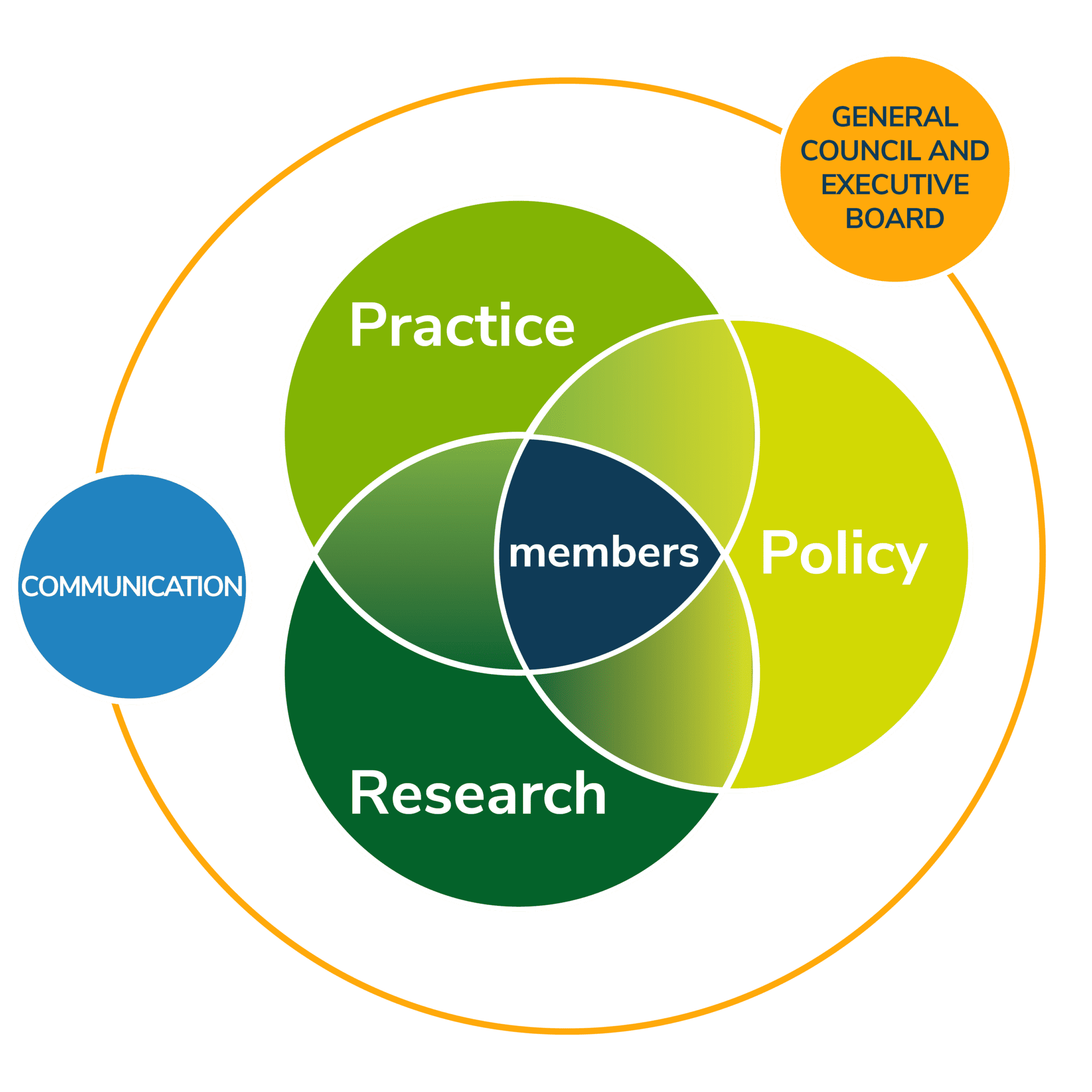
Structuring our work over a policy, a practice, and a research platform, we focus on exploring and strengthening the links between these areas.
Our approach focuses on integrated concepts to health, reducing health inequality gaps and gradients, working on determinants across the life course, whilst contributing to the sustainability and wellbeing of people and the planet.

EuroHealthNet is co-funded by the European Union. However, the information and views set out on this website are those of the author and do not necessarily reflect the official opinion of the European Commission. The Commission does not guarantee the accuracy of the data included on this website. Neither the Commission nor any person acting on the Commission's behalf may be held responsible for the use which may be made of the information contained therein.