



National strategy: Promoting healthy lifestyles and financing prevention in the Netherlands
Case study
Netherlands
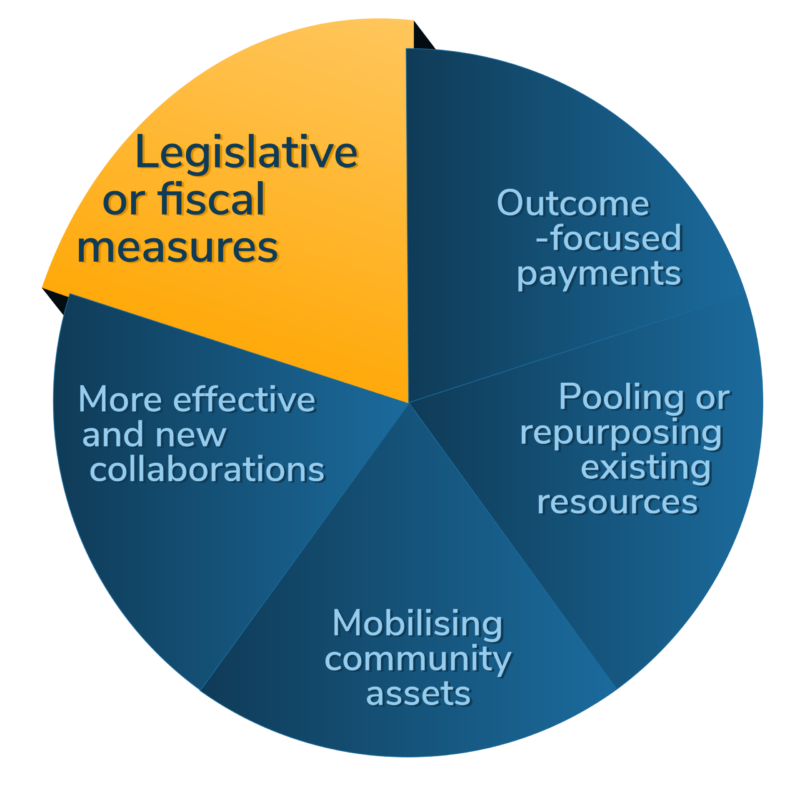
Legislative actions
The Netherlands tackles obesity, smoking, and inactivity through a groundbreaking National Prevention Agreement and innovative financing. By uniting government, municipalities, insurers, and civil society, the 2040 strategy links upfront investments in healthier environments—like food labeling, tobacco taxes, and active living—to long-term health and economic gains. Measurable targets, a new assessment framework, and co-investment models ensure accountability and shared benefits across sectors.
Context and problems addressed
Currently, around half of all Dutch people are overweight and only 53% of the population exercises enough. Lifestyle-related risk factors such as smoking, excessive alcohol consumption, unhealthy diets and lack of physical activity contribute significantly to diseases such as diabetes, cancer and heart disease. In response, the Dutch government aims to make healthy living easier and all children grow up in a healthy environment by 2040.
At the same time, policymakers face a structural challenge when investing in prevention. Preventive measures often require upfront spending, while the resulting health improvements and financial savings only materialise later and may benefit different sectors . To address this challenge, the government is exploring new approaches to financing prevention and capturing its long-term benefits.
Intervention and financing model
To promote healthier lifestyles, the national government collaborates with municipalities, healthcare providers, health insurers, businesses and social organisations such as the Hartstichting (Dutch Heart Foundation) and the Dutch Cancer Society. These efforts are coordinated through national agreements aimed at reducing smoking, tackling obesity and encouraging healthier living. One key framework is the National Prevention Agreement, concluded with more than 70 civil society organisations.
The framework includes measures to improve public health, such as increasing opportunities for physical activity, promoting healthier food environments, discouraging tobacco use through higher taxes, and preventing alcohol consumption and reduce drug use. It also promotes healthier food choices through initiatives supported by the Netherlands Nutrition Centre and the Nutri-Score label.
Alongside these policy measures, the government is developing an investment model for prevention to improve how preventive actions are financed and evaluated. The Ministry of Health, Welfare and Sport (Netherlands) is exploring ways to better link investments in prevention with measurable outcomes and long-term savings.
As part of this effort, the State Secretary for Youth, Prevention and Sport asked the National Institute for Public Health and the Environment (RIVM) to develop an assessment framework. This framework evaluates preventive measures using indicators such as health outcomes, financial impacts and labour market effects, while also clarifying what constitutes “appropriate evidence” for prevention interventions.
The framework supports decision-making by municipalities, government authorities and other stakeholders such as healthcare organisations and knowledge institutions. It also enables potential co-investment arrangements, allowing public and non-public actors to jointly finance preventive initiatives. Monitoring systems then track whether the expected outcomes are achieved.
To promote healthier lifestyles, the national government collaborates with municipalities, healthcare providers, health insurers, businesses and social organisations such as the Hartstichting (Dutch Heart Foundation) and the Dutch Cancer Society.
Key outcomes and associated measurements
Dutch prevention policies include several measurable targets for 2040. The government aims for 75% of the population to meet recommended physical activity levels, defined as at least 150 minutes of active exercise per week.
Another key objective is to reduce the proportion of adults who are overweight from around 50% today to a maximum of 38% by 2040.
The government also aims to create a smoke-free generation by 2040, with children growing up without exposure to tobacco and with no more than 5% of adults smoking.
The new prevention investment model will contribute to evaluating whether preventive measures achieve their expected outcomes by analysing indicators such as health improvements, financial savings and impacts on labour demand in the healthcare sector.
Related case studies

Abatement policies to address childhood obesity in Europe

The Sugar Sweetened Drinks Tax in Ireland

Scotland’s 10-year strategy “Together we can” to embed prevention into national planning, budgeting
About EuroHealthNet
Building a healthier future for all by addressing the determinants of health and reducing inequalities.
EuroHealthNet is the Partnership of public health agencies and organisations building a healthier future for all by addressing the determinants of health and reducing inequalities. Our focus is on preventing disease and promoting good health by looking within and beyond the health system.
Structuring our work over a policy, a practice, and a research platform, we focus on exploring and strengthening the links between these areas.
Our approach focuses on integrated concepts to health, reducing health inequality gaps and gradients, working on determinants across the life course, whilst contributing to the sustainability and wellbeing of people and the planet.

EuroHealthNet is co-funded by the European Union. However, the information and views set out on this website are those of the author and do not necessarily reflect the official opinion of the European Commission. The Commission does not guarantee the accuracy of the data included on this website. Neither the Commission nor any person acting on the Commission's behalf may be held responsible for the use which may be made of the information contained therein.