



Envisaging a Social Prescribing Fund in England

Case study
England, United Kingdom
Local funds and national investor(s)
England could scale up social prescribing through a groundbreaking £100m+ national fund and hybrid financing model. The proposed 10-year Social Prescribing Fund envisions blending local investment from health partnerships, businesses, and philanthropy with national support to expand access, measure impact through wellbeing metrics such as WELLBY, and turn referrals into lasting community health gains. The model builds on the success of 2.6 million NHS referrals and the Big Local Programme, with a focus on directing resources to areas of greatest need.
Context and problems addressed
England was the first country to embed social prescribing within its national health policy. Since 2019, the National Academy for Social Prescribing (NASP) has been at the heart of rolling out social prescribing in England, using non-clinical and non-medical prescriptions to improve the nation’s health and wellbeing.
Social Prescribing acts as a bridge between the NHS and the support available through voluntary and community organisations. The NHS invests over £100m a year in over 3,300 full-time-equivalent Social Prescribing Link Workers (SPLWs). Sine 2019, more than 5.5 million referrals have been made to social prescribing services. In England, health professionals and others can refer a patient to a SPLW (or equivalent role), who has the time to understand that individual’s needs. The SPLW can then connect that person to appropriate community-based groups, activities, and services.
NASP has also been designated as the World Health Organization (WHO) Collaborating Centre for Social Prescribing Policy and Development. As part of this role, the NASP aims to demonstrate how new funding models could expand and scale up the use of social prescribing. NASP has worked with governments or health partners in more than 35 countries.
NHS funding for social prescribing link workers currently operates through a system of legal entitlements in the 2019 five-year update to the national GP contract.
In Autumn 2023, the National Lottery Community Fund awarded a grant to NASP to develop models of shared investment in social prescribing services. This work brought together nearly 100 organisations from different sectors, whose contributions informed the development of what has been termed the Social Prescribing Fund.
This is an innovative new forecast based on a projected England-wide mechanism for social investment that would use methods that take advantage of the pre-existing social prescribing systems in place.
Intervention and financing model
NASP is a national charity whose aim is to champion and advance social prescribing. This currently through supporting and connecting people, communities and organisations, to allow for more people in England to better their health and wellbeing using non-medical interventions.
The Social Prescribing Fund aims to create a new, England-wide model of shared investment that increases funding for community-based services linked to social prescribing, building capacity to meet growing demand. Fragmented funding would be replaced with an integrated system. This model mixes (i) local financing through local ICPs, working together with local businesses and philanthropists, with (ii) national-level financing through national investor(s).
This hybrid model is designed to create a highly attractive investment vehicle by requiring equal new contributions from local and national partners, reinforced through matched funding. Drawing on stakeholder feedback, it aims to strengthen commitment and unlock additional investment, expanding capacity and impact rather than replacing existing funding.
To generate lasting commitment and increase efficiency, the fund is based on a 10-year investment period. This approach mirrors the design of the , which gave 150 communities approximately £1 million to improve health and wellbeing over 10 years.
The Social Prescribing Fund is designed to complement, not replace, core statutory funding. For example, it builds on existing NHS investment in link workers by ensuring there is sufficient parallel investment in the community-based activities, services, and organisations to which people are referred.
ICPs are identified as central to the model. They play a key role in convening partners, promoting investment, and strengthening collaboration across the NHS, local government, and the voluntary, community, and social enterprise sector, without directly holding or managing the funds themselves.
Local systems would have significant flexibility in how they raise their investment share. The only requirement is that they must include contributions from at least three separate sources: (i) the NHS, (ii) local government, and (iii) local employers and/or philanthropists. A benchmark level of local investment is proposed at a mean of 90 pence per head of population per year, amounting to around £50 million nationally if all areas participate, and adjusted for need and inequalities.
To maximise impact, the model favours targeted investment based on (i) the demand for activities as revealed by SPLWs and their referrals; and (ii) the Community Needs Index 2023, ensuring resources reach communities with the greatest unmet need.
This approach mirrors the design of the Big Local Programme, which gave 150 communities approximately £1 million to improve health and wellbeing over 10 years.
Key outcomes and associated measurements
The National Academy for Social Prescribing has identified a set of tools to measure both the impact of the Social Prescribing Fund and that of social prescribing more broadly.
The report introduces the concept of Wellbeing Adjusted Life Year (WELLBY), which helps to calculate the total amount of well-being experienced by an individual over one year by quantifying wellbeing in economic terms. The WELLBY is complemented by the to measure personal wellbeing. The ONS4 measures ask people to evaluate how satisfied they are with their lives overall, whether they feel they have meaning and purpose in their lives and their emotions during a particular period (both positive and negative) as a measure of wellbeing.
Additionally, the National Academy for Social Prescribing produced 15 evidence reviews showing a positive impact of social prescribing on wellbeing, economy and health. One example of economic impact is that, for every £1 spent on the salary of a Social Prescribing Link Worker, £4 is saved for the National Health Service.
Publications
Related case studies

Fair chance fund

Portugal’s Social Innovation Initiative

Tackling unemployment and social exclusion among immigrants in Finland (Koto-SIB)
About EuroHealthNet
Building a healthier future for all by addressing the determinants of health and reducing inequalities.
EuroHealthNet is the Partnership of public health agencies and organisations building a healthier future for all by addressing the determinants of health and reducing inequalities. Our focus is on preventing disease and promoting good health by looking within and beyond the health system.
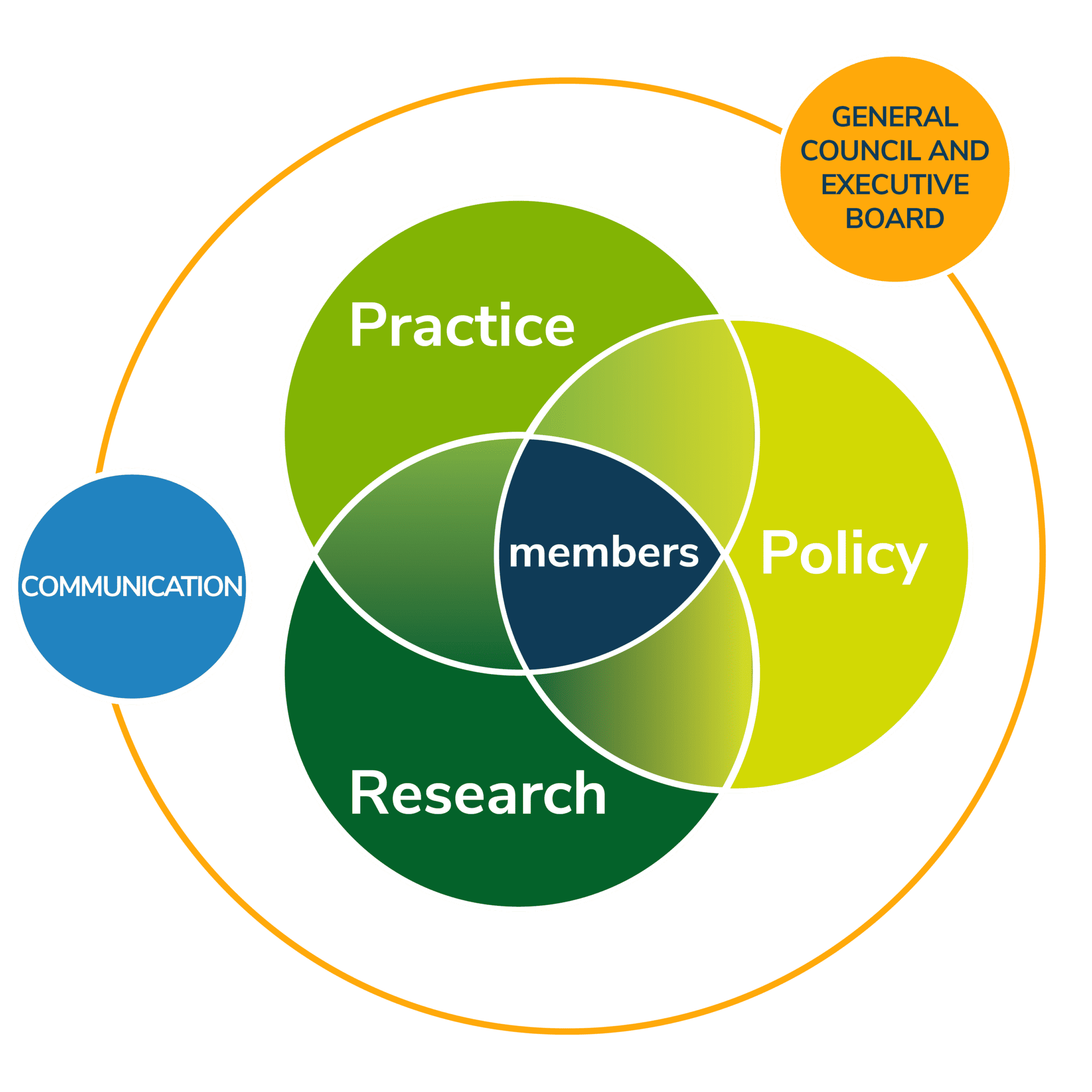
Structuring our work over a policy, a practice, and a research platform, we focus on exploring and strengthening the links between these areas.
Our approach focuses on integrated concepts to health, reducing health inequality gaps and gradients, working on determinants across the life course, whilst contributing to the sustainability and wellbeing of people and the planet.
EuroHealthNet is co-funded by the European Union. However, the information and views set out on this website are those of the author and do not necessarily reflect the official opinion of the European Commission. The Commission does not guarantee the accuracy of the data included on this website. Neither the Commission nor any person acting on the Commission's behalf may be held responsible for the use which may be made of the information contained therein.